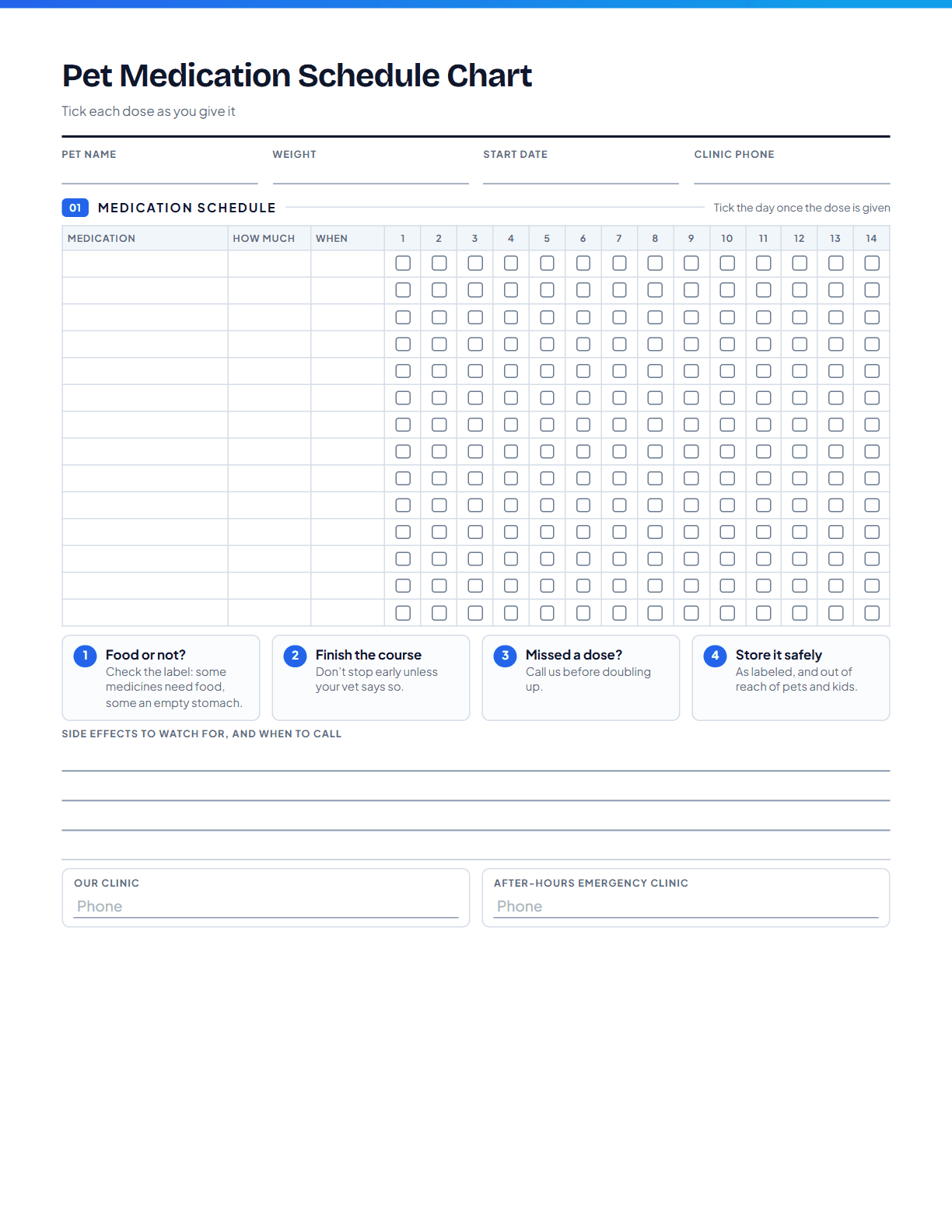
Pet Medication Schedule Chart
1 page, US Letter, portrait
A two-week tick-off chart so everyone in the house knows which medicine your pet gets, how much, and when, and whether today’s dose has already been given.
Free · Unbranded · Client handouts
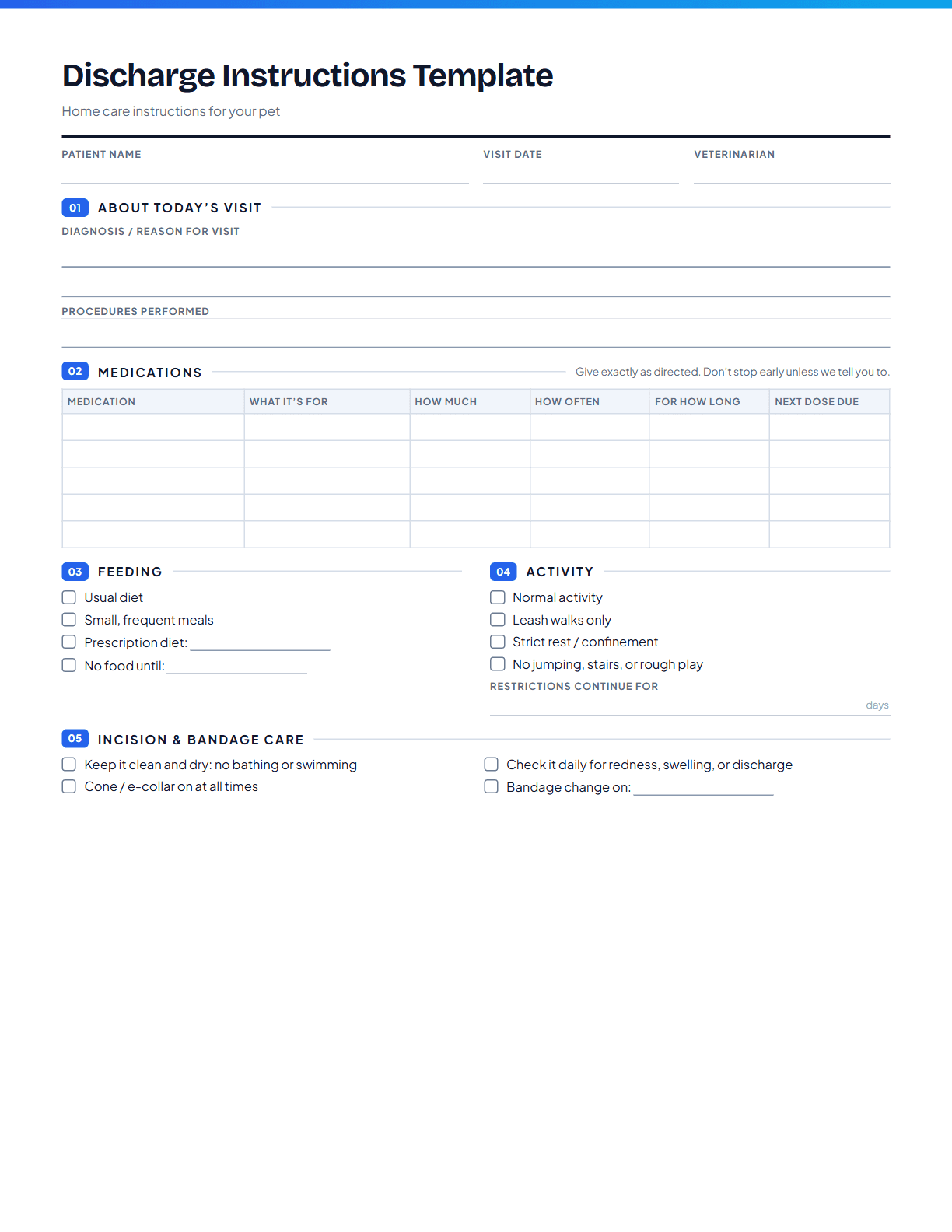
A take-home sheet clients can actually follow: what was done, every medication with dose and timing, feeding and activity rules, incision care, and a clear list of signs that mean "call us now".
Unbranded: no logo or linksNo account neededPrint at 100% on US LetterUpdated
What’s on the form
Patient, visit date, veterinarian, the diagnosis or reason for the visit, and procedures performed.
Each medication with what it’s for, how much, how often, for how long, and when the next dose is due.
Tick-box diet and activity instructions with a duration, so restrictions have a clear end date.
Keep dry, daily checks, e-collar use, and the bandage-change date.
A checklist of warning signs the team can tick for this patient, from breathing trouble to incision changes.
A 7-day table for appetite, energy, toileting, the incision, and doses given, for owners to bring to the recheck.
Recheck and suture-removal dates, expected lab results, the clinic number, and the after-hours emergency number.
Fill in online
Every line on the form is editable right here. When you’re done, print it or choose “Save as PDF” in the print dialog. Everything stays in your browser.
Click any line to type, or add your logo. Nothing is uploaded or saved.
Using it well
The single most useful field for owners. It removes the guesswork about whether a dose was already given in hospital.
A shorter, specific warning list gets read. Tick the signs that matter for this case instead of handing over every possibility.
Spend two minutes reading it with the client and have them sign. Questions answered at discharge are calls you don’t get at midnight.
Skip the blank page
VetStack drafts the visit’s SOAP note from a recording in under a minute, so the time goes to the client at the desk instead of the record.
Printing, editing, and what the form does and doesn’t cover.
The diagnosis or procedure, every medication with dose, frequency, duration and next dose due, feeding and activity instructions, wound or bandage care, warning signs that need a call, recheck dates, and how to reach the clinic and an emergency service.
Yes. Fill in the online version on this page and print it, or use the discharge instructions generator to draft the wording for common procedures.
Many practices ask clients to sign that they received and understood the instructions, and keep a copy in the record. The template includes signature lines for both the client and the discharging staff member.
Yes. There’s a contact panel for the clinic number and the after-hours emergency clinic on page two.
1 page, US Letter, portrait
A two-week tick-off chart so everyone in the house knows which medicine your pet gets, how much, and when, and whether today’s dose has already been given.
2 pages, US Letter, portrait
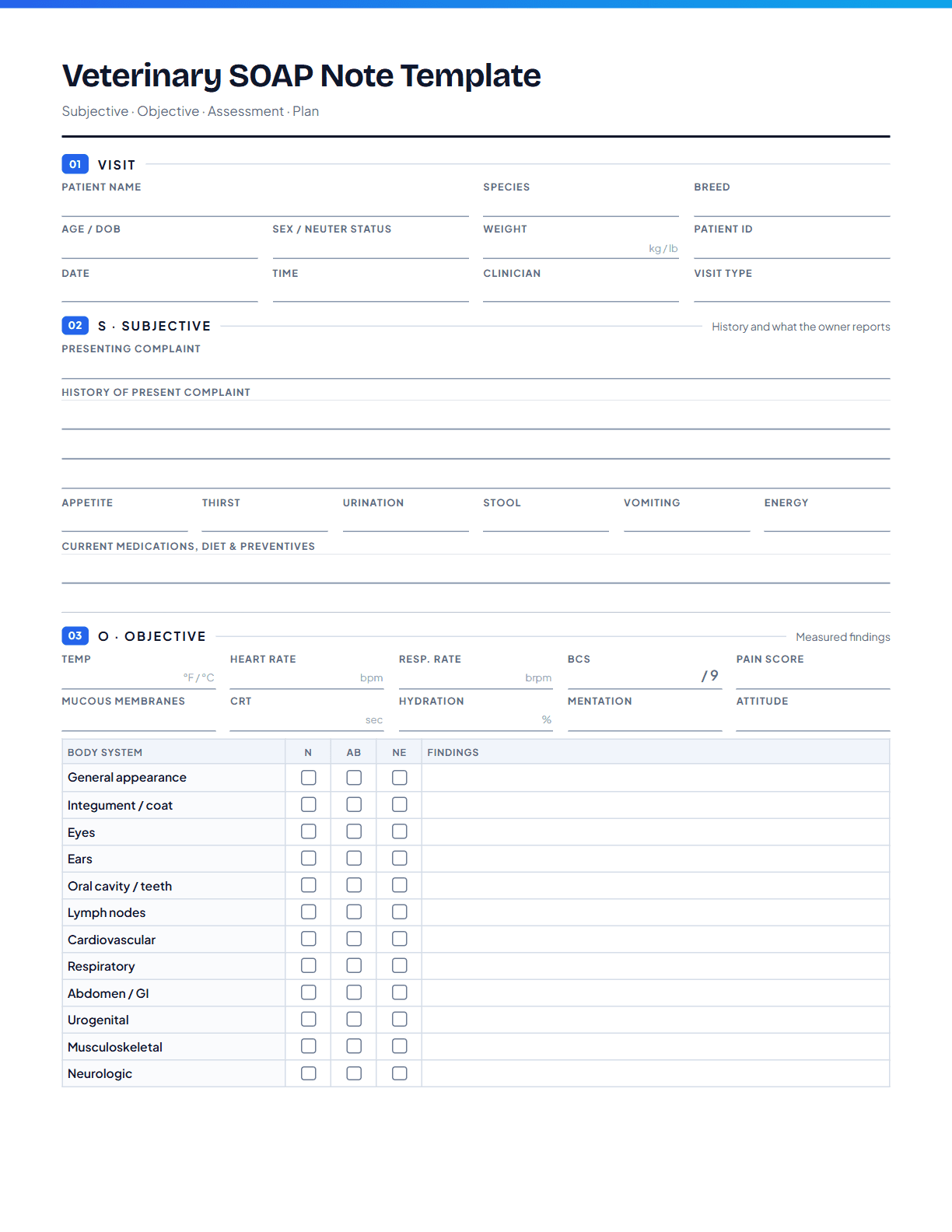
A clean, two-page SOAP note for exam-room documentation. Vitals and a body-systems checklist up front, then a structured assessment and plan with a medication table, so nothing important gets lost between the exam and the record.
2 pages, US Letter, portrait
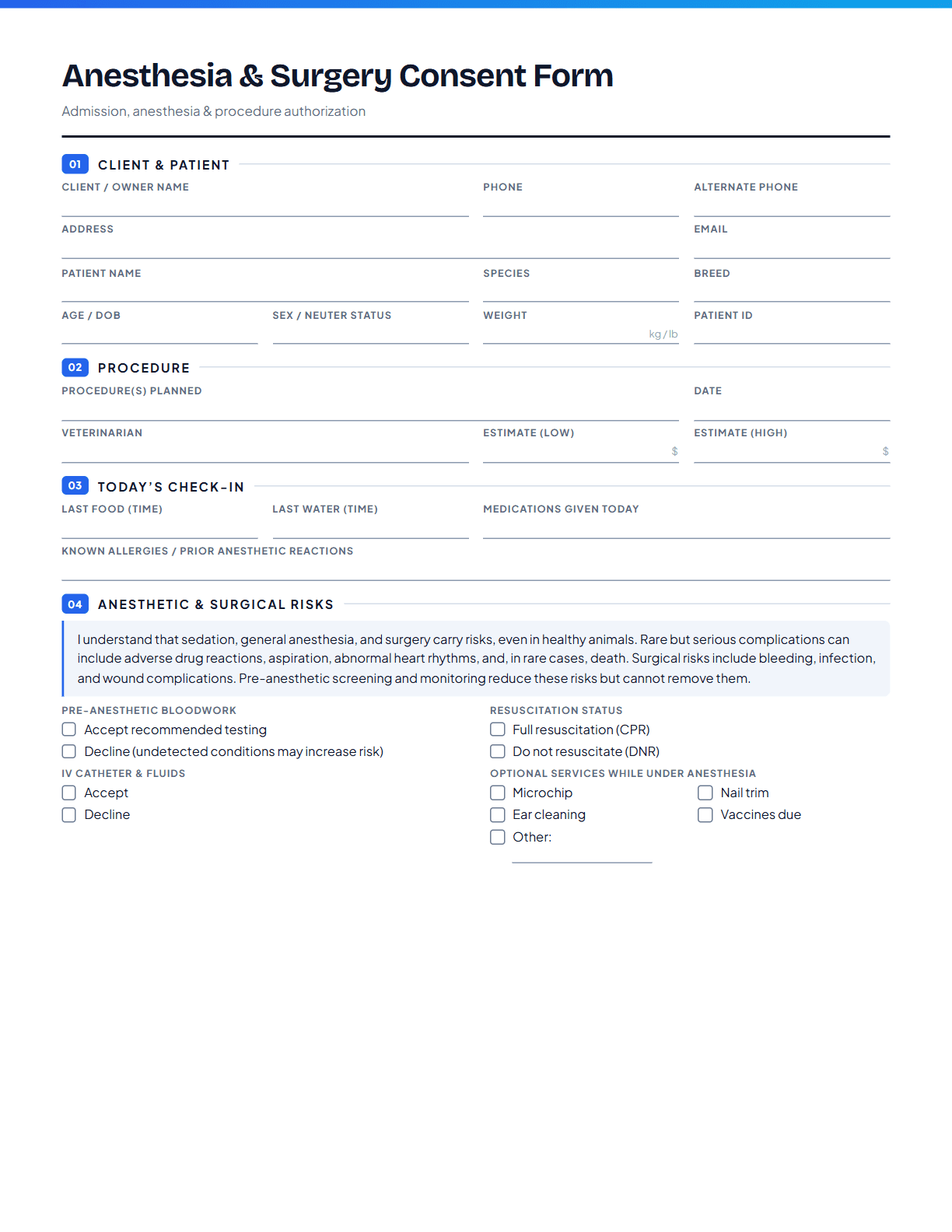
An admission consent form for anesthesia and surgery. It captures the procedure and estimate, fasting and medications, the client’s decisions on bloodwork, fluids and resuscitation, and what to do if something unexpected is found.
A starting point, not legal or clinical advice. VetStack’s forms are general templates. Requirements for medical records, consent, and controlled substances vary by state and practice, so review the wording with your practice’s attorney and check your state veterinary board’s rules before adopting a form as standard.