Toxic Plants for Dogs & Cats Chart
1 page, US Letter, portrait
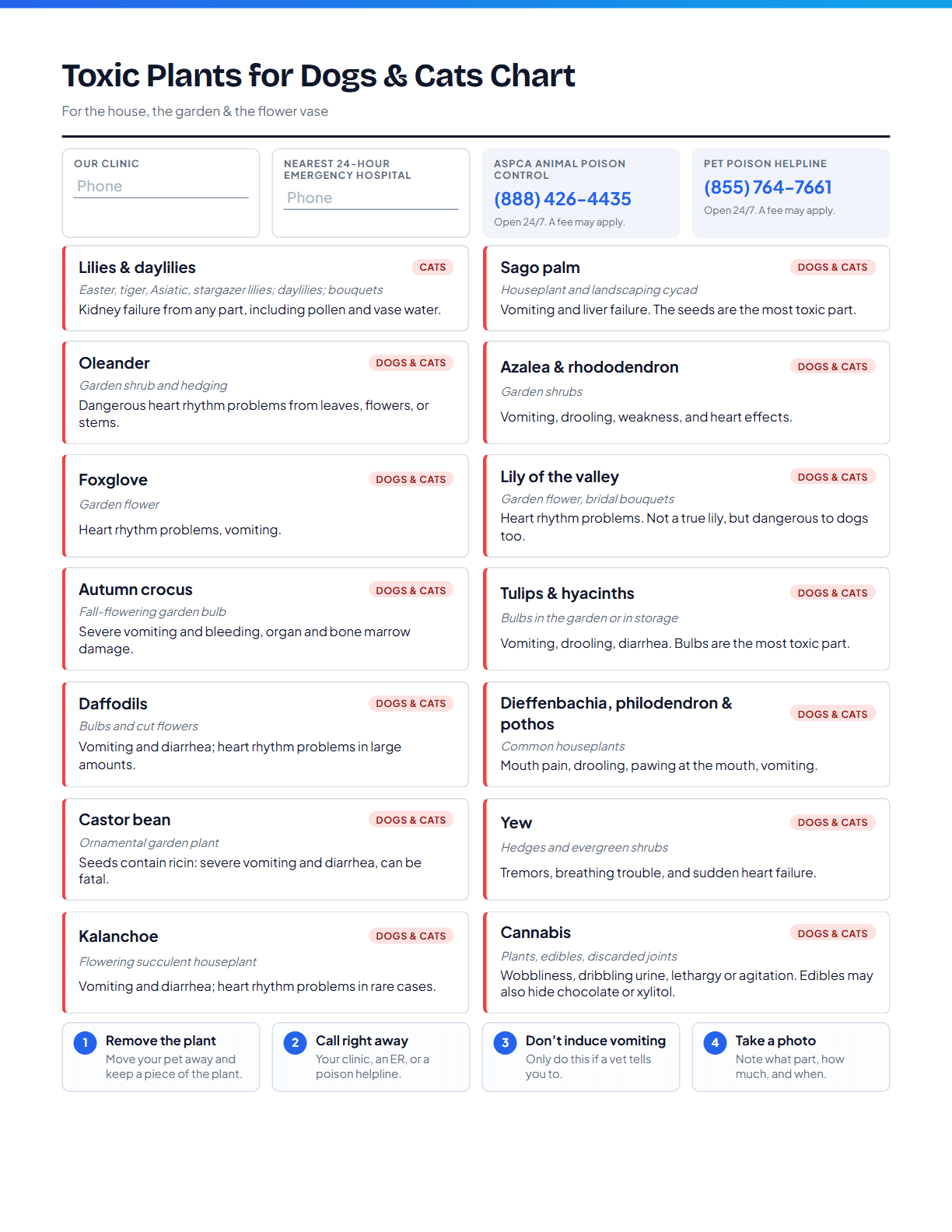
A one-page chart of the house, garden, and bouquet plants that most often poison dogs and cats: what each does, which pets are at risk, and what to do if your pet chews one.
Free · Unbranded · Client handouts
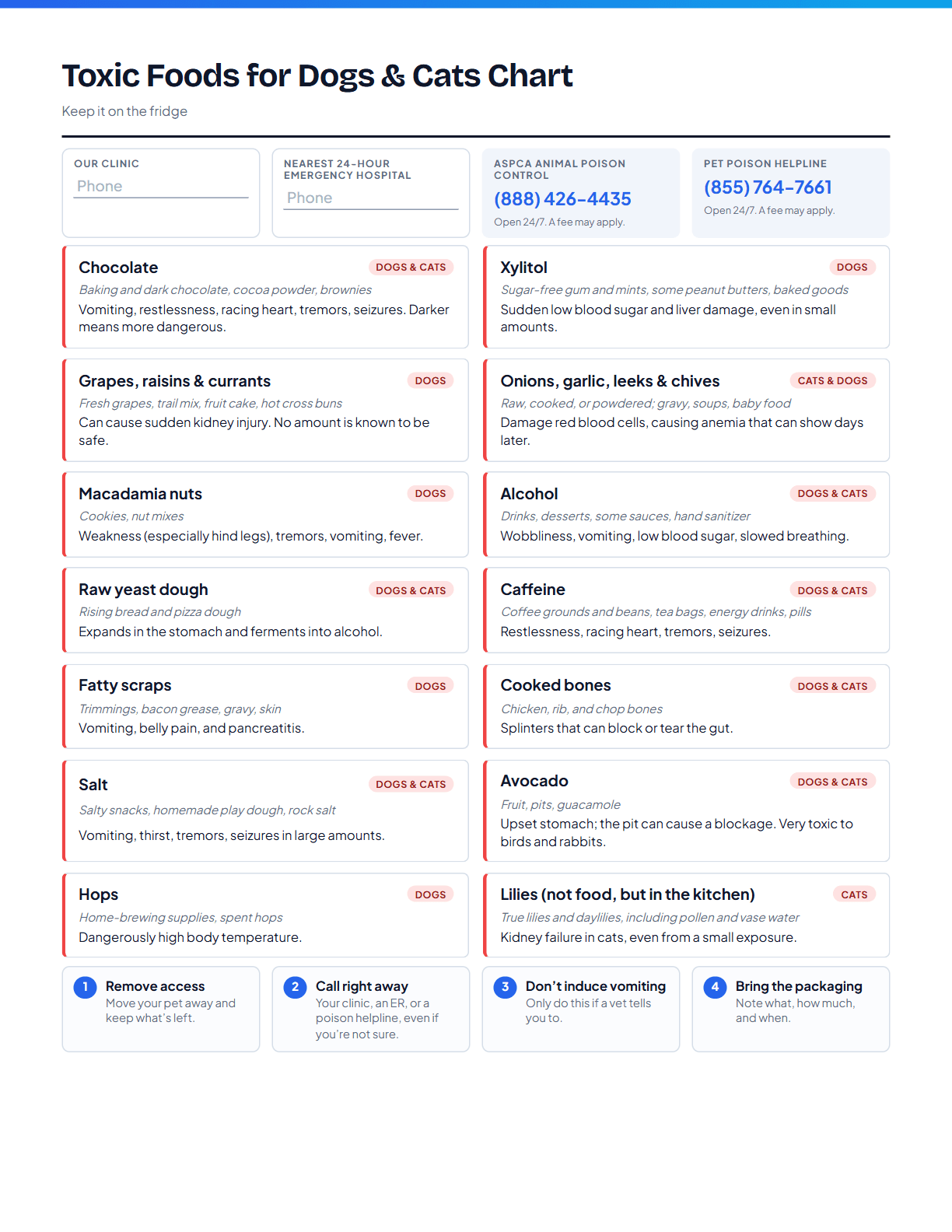
A one-page kitchen chart of the foods that most often poison dogs and cats: where they hide, what they do, and which pets are at risk, plus exactly what to do and who to call if your pet eats something.
Unbranded: no logo or linksNo account neededPrint at 100% on US LetterUpdated
What’s on the form
Chocolate, xylitol, grapes and raisins, onions and garlic, macadamia nuts, alcohol, raw yeast dough, caffeine, fatty scraps, cooked bones, salt, avocado, hops, and lilies.
Everyday sources owners don’t think of: sugar-free gum, some peanut butters, garlic powder, coffee grounds, play dough.
The main concern for each item (kidney injury, low blood sugar, anemia) and whether dogs, cats, or both are affected.
Four steps: remove access, call right away, don’t induce vomiting unless told to, bring the packaging.
Blank lines for the clinic and nearest emergency hospital, plus the ASPCA Animal Poison Control Center and Pet Poison Helpline numbers.
Fill in online
Every line on the form is editable right here. When you’re done, print it or choose “Save as PDF” in the print dialog. Everything stays in your browser.
Click any line to type, or add your logo. Nothing is uploaded or saved.
Using it well
New owners are the most receptive audience, and the first holidays with a new pet are when many exposures happen.
Write your clinic and the closest 24-hour emergency hospital on the chart before handing it out. That’s the part owners need in a hurry.
Tell owners to call even if they aren’t sure how much was eaten. Early decontamination is far easier than treating the effects.
Printing, editing, and what the form does and doesn’t cover.
Common ones include chocolate, xylitol (in sugar-free gum and some peanut butters), grapes and raisins, onions, garlic and chives, macadamia nuts, alcohol, raw yeast dough, caffeine, and hops. Fatty scraps and cooked bones are also dangerous.
Onions, garlic and other alliums (cats are especially sensitive), chocolate, alcohol, raw yeast dough, and caffeine. Lilies aren’t a food, but every part of true lilies and daylilies can cause kidney failure in cats.
Not unless a veterinarian or poison control tells you to. Some substances do more damage coming back up, and home methods can be dangerous. Call first.
The ASPCA Animal Poison Control Center and Pet Poison Helpline are available 24/7 but may charge a consultation fee. Your own veterinarian or emergency clinic is always a good first call.
1 page, US Letter, portrait
A one-page chart of the house, garden, and bouquet plants that most often poison dogs and cats: what each does, which pets are at risk, and what to do if your pet chews one.
2 pages, US Letter, portrait
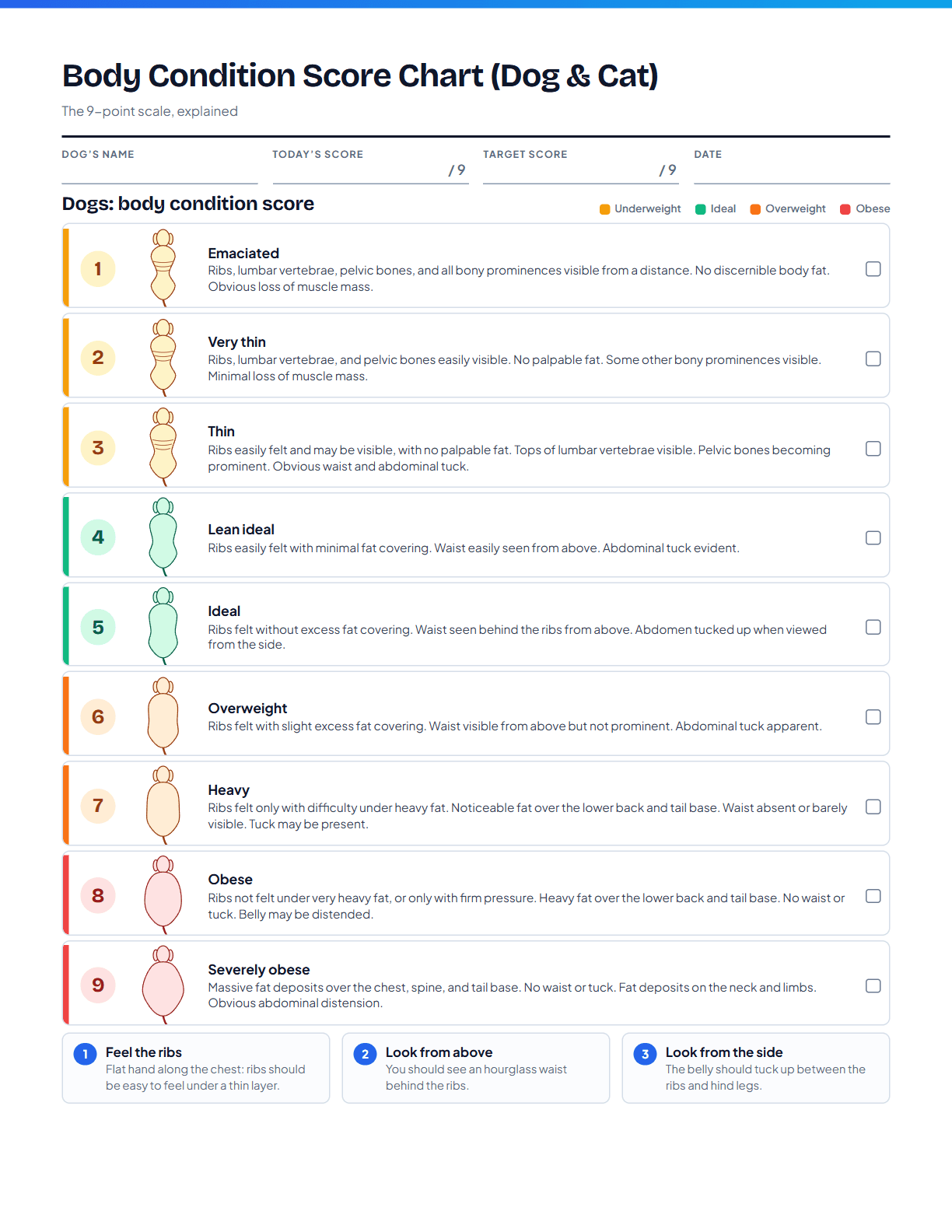
The 9-point body condition scale, one page for dogs and one for cats. Every score is described in plain words, with a top-view outline showing how the waist changes, so owners can score their pet at home and track progress.
1 page, US Letter, portrait
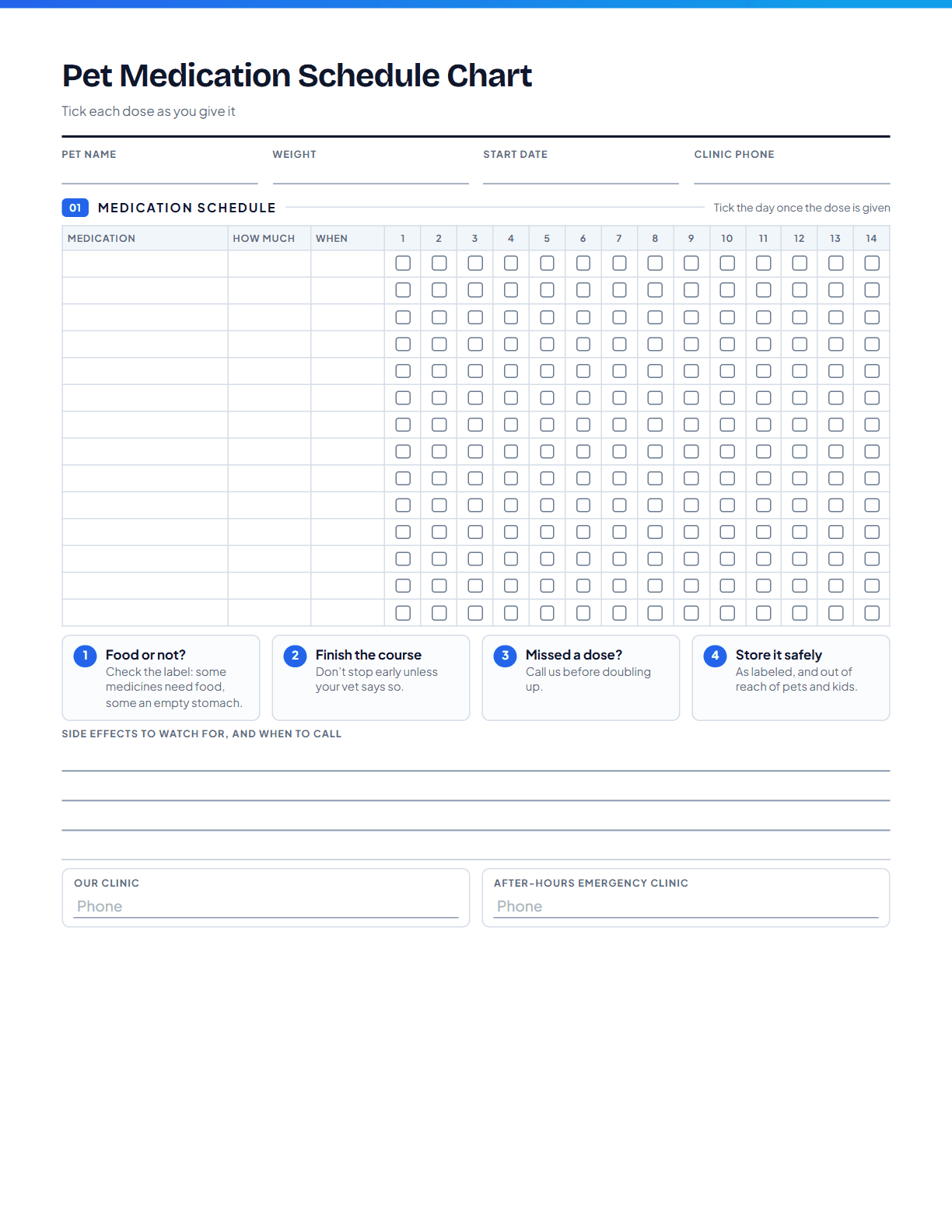
A two-week tick-off chart so everyone in the house knows which medicine your pet gets, how much, and when, and whether today’s dose has already been given.
A starting point, not legal or clinical advice. VetStack’s forms are general templates. Requirements for medical records, consent, and controlled substances vary by state and practice, so review the wording with your practice’s attorney and check your state veterinary board’s rules before adopting a form as standard.