VetStack
FeaturesPricing
BlogFAQContact
HomeVeterinary formsToxic Plants for Dogs & Cats Chart

Free · Unbranded · Client handouts

Toxic Plants for Dogs & Cats: Printable Chart
Free PDF.

A one-page chart of the house, garden, and bouquet plants that most often poison dogs and cats: what each does, which pets are at risk, and what to do if your pet chews one.

Fill in online
  • 1 page
  • US Letter
  • 14 common plants
  • Helpline numbers

Unbranded: no logo or linksNo account neededPrint at 100% on US LetterUpdated November 10, 2026

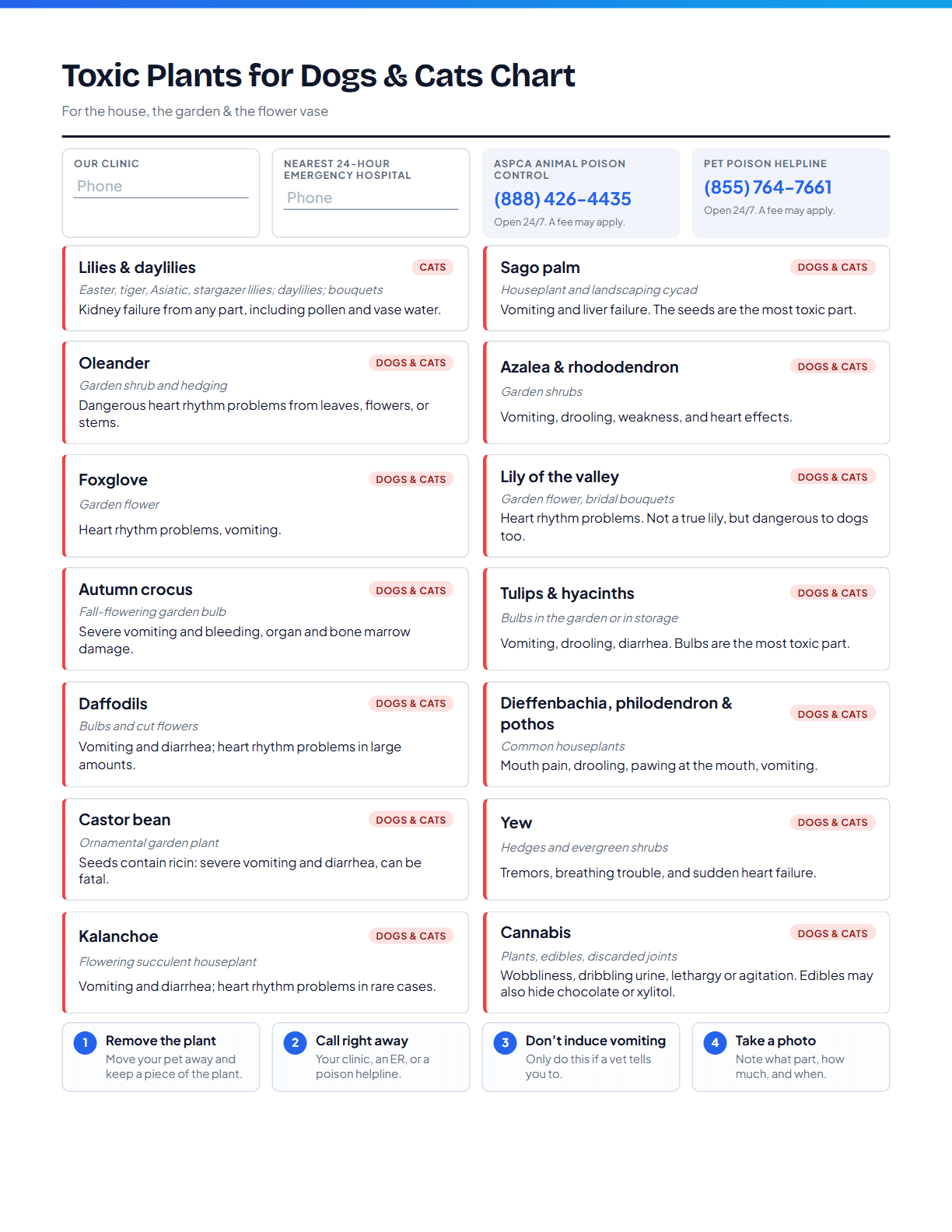
Preview of page one of the Toxic Plants for Dogs & Cats Chart
PDF · 1 page

What’s on the form

Every section, and what it’s for.

01

Dangerous plants

Lilies, sago palm, oleander, azalea, foxglove, lily of the valley, autumn crocus, tulips and hyacinths, daffodils, dieffenbachia and pothos, castor bean, yew, kalanchoe, and cannabis.

02

Where you find them

Bouquets, houseplants, garden beds, hedges, and bulbs in storage.

03

What it does & who’s at risk

The main concern for each plant (kidney failure, heart rhythm problems, liver damage) and whether dogs, cats, or both are affected.

04

What to do & who to call

Four steps after an exposure, your clinic and nearest ER, and two 24/7 poison helplines.

Fill in online

Type it, then print or save.

Every line on the form is editable right here. When you’re done, print it or choose “Save as PDF” in the print dialog. Everything stays in your browser.

Toxic plants reference

Click any line to type, or add your logo. Nothing is uploaded or saved.

Full size

Using it well

Small habits that make it worth the paper.

Check bouquets for lilies

Lilies are the plant most likely to arrive unnoticed, in gifts and flower deliveries, and are dangerous to cats in tiny amounts.

Bulbs are the concentrated part

Dogs dig. Tulip, hyacinth, and daffodil bulbs in the garden or in storage are a bigger risk than the flowers.

Photograph the plant

If your pet chews something unknown, a photo helps your vet or a helpline identify it quickly.

Questions about
this form.

Printing, editing, and what the form does and doesn’t cover.

Which plants are most poisonous to cats?+

True lilies (Lilium) and daylilies (Hemerocallis) are among the most dangerous: every part, including pollen and vase water, can cause kidney failure in cats. Sago palm, oleander, and autumn crocus are also very dangerous.

Which plants are most poisonous to dogs?+

Sago palm (especially the seeds), oleander, yew, autumn crocus, and castor bean can be life-threatening. Bulbs of tulips, hyacinths, and daffodils commonly cause vomiting when dogs dig them up.

My pet chewed a houseplant like pothos. Is it an emergency?+

Plants like pothos, philodendron, and dieffenbachia usually cause mouth pain, drooling, and vomiting rather than organ damage, but call your vet or a poison helpline to be sure, especially for small pets or large amounts.

Is this a complete list?+

No. It covers common, dangerous plants. The ASPCA keeps a searchable list of toxic and non-toxic plants, and the VetStack toxic plants reference has more detail.
Often printed together

All veterinary forms
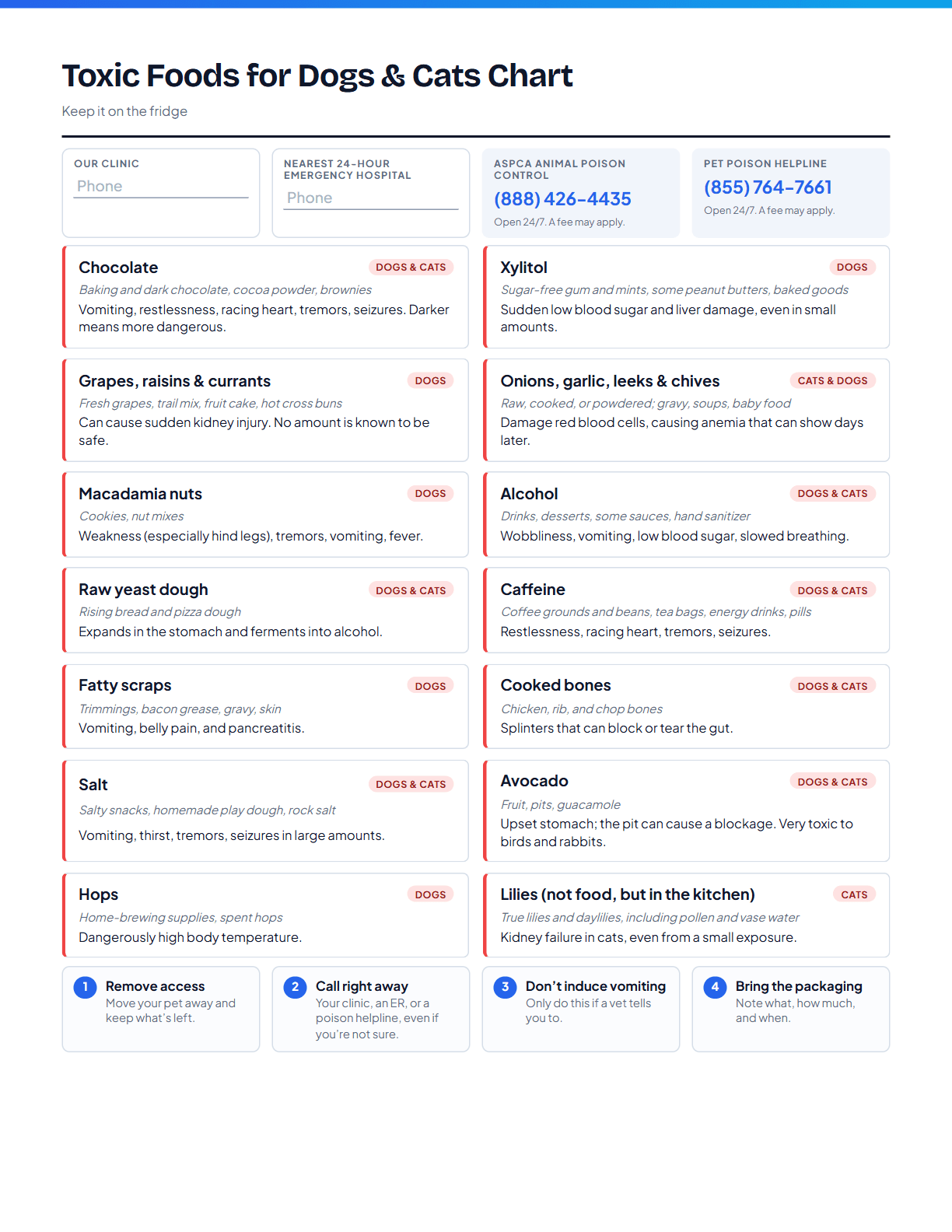
Preview of page one of the Toxic Foods for Dogs & Cats Chart

Toxic Foods for Dogs & Cats Chart

1 page, US Letter, portrait

A one-page kitchen chart of the foods that most often poison dogs and cats: where they hide, what they do, and which pets are at risk, plus exactly what to do and who to call if your pet eats something.

Fill in online
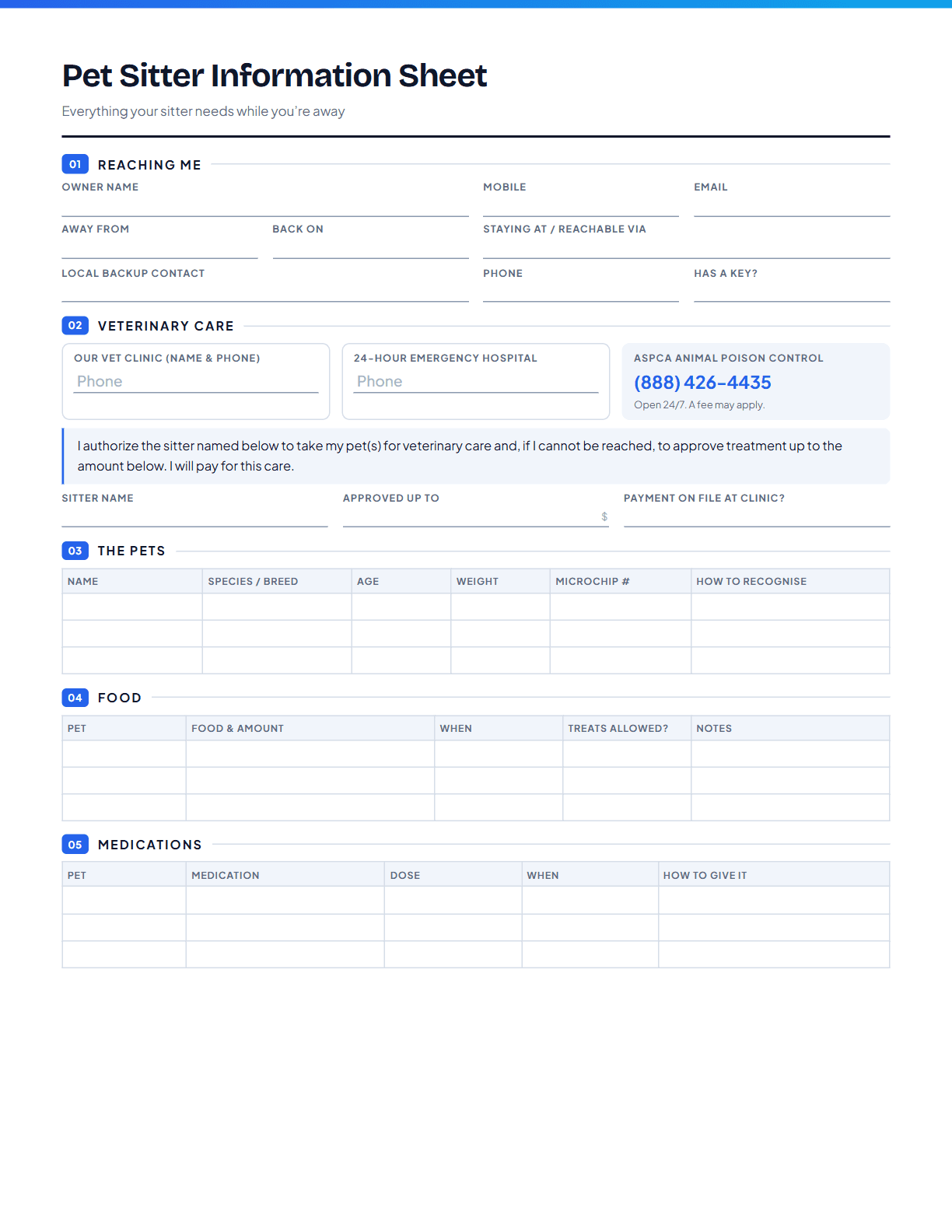
Preview of page one of the Pet Sitter Information Sheet

Pet Sitter Information Sheet

2 pages, US Letter, portrait

Everything a sitter needs in one place: how to reach you, your vet and the nearest ER, permission to get your pet treated, plus each pet’s food, medicines, routine, quirks, and the house details.

Fill in online
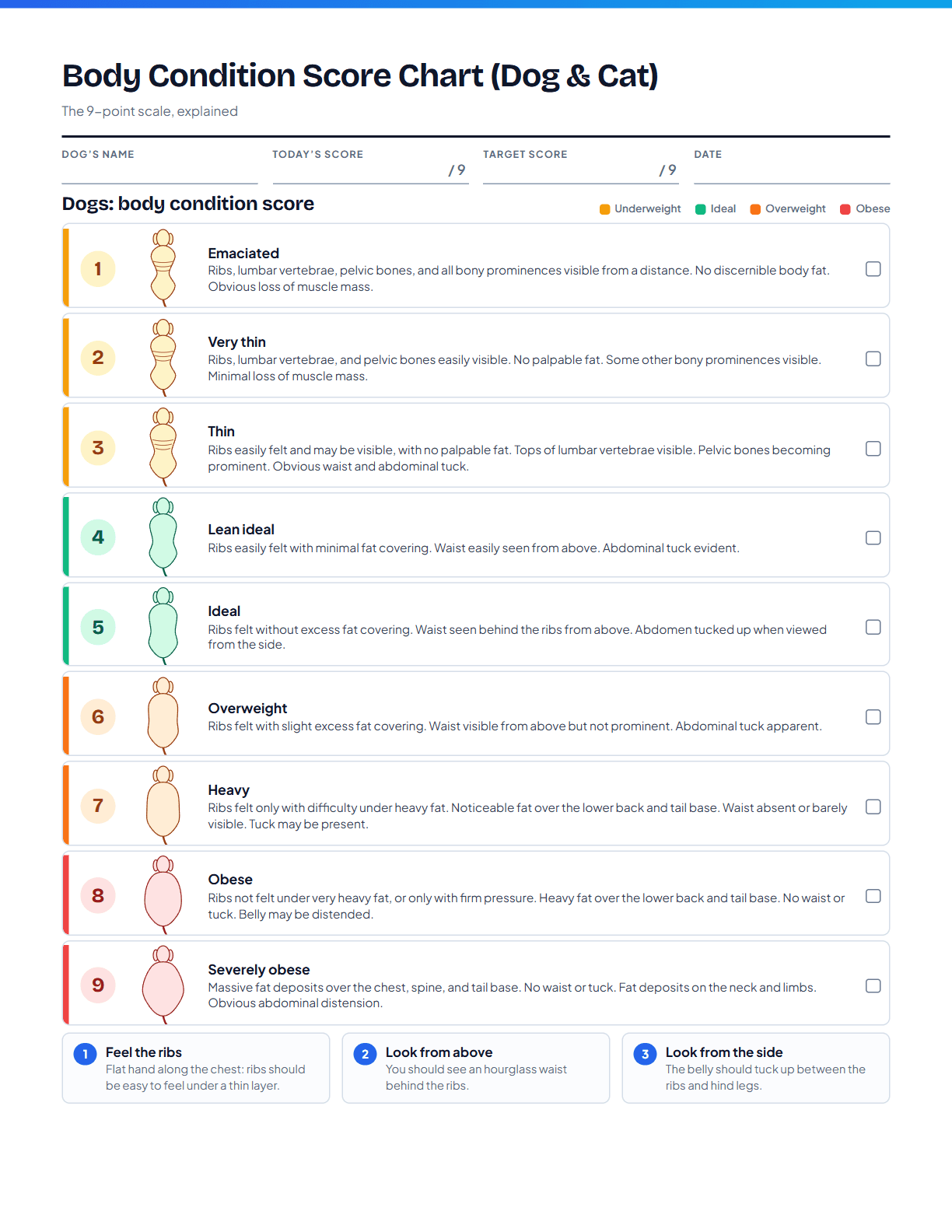
Preview of page one of the Body Condition Score Chart (Dog & Cat)

Body Condition Score Chart (Dog & Cat)

2 pages, US Letter, portrait

The 9-point body condition scale, one page for dogs and one for cats. Every score is described in plain words, with a top-view outline showing how the waist changes, so owners can score their pet at home and track progress.

Fill in online

A starting point, not legal or clinical advice. VetStack’s forms are general templates. Requirements for medical records, consent, and controlled substances vary by state and practice, so review the wording with your practice’s attorney and check your state veterinary board’s rules before adopting a form as standard.

VetStack
VetStack

AI-powered SOAP note generation for veterinarians. Save time, see more patients.

Encrypted in transit and at rest, isolated per practice, and never used to train AI. How we protect your data

Stay in the loop

New tools, product updates, and clinical workflow ideas, straight to your inbox. No spam.

Free Tools

All Free ToolsBenadryl Dosage CalculatorDrug Dosage CalculatorIV Fluid Rate CalculatorBody Condition ScoreBSA CalculatorIRIS CKD StagingVaccine Schedule GeneratorPrintable Veterinary FormsSOAP Note TemplateEuthanasia Consent FormVeterinary NewsFind a VeterinarianList Your Clinic

Dog & Cat Diseases

All ConditionsParvovirus in DogsFeline HyperthyroidismHip Dysplasia in DogsChronic Kidney Disease in CatsHeartworm Disease in DogsFLUTD in Cats

Learning & Exam Prep

Free Veterinary CECE Requirements by StateVeterinary ConferencesVeterinary ExternshipsAll Exam PrepNAVLE Practice QuestionsVTNE Practice QuestionsBCSE Practice Questions

Compare

Best AI Scribe SoftwareVetStack vs ScribbleVetVetStack vs ScribenoteVetStack vs VetRecVetStack vs CoVet

Company

AboutPricingReferral ProgramBlogSalary SurveySalary by StateBecome a VeterinarianVet SchoolsCompare Vet SchoolsJob BoardPost a Job (Free)SecurityFAQContact

© 2026 Ilias Ventures LLC. VetStack is operated by Ilias Ventures LLC. All rights reserved.

PrivacyTermsCookiesAcceptable UseDisclaimerService ProvidersAccessibility