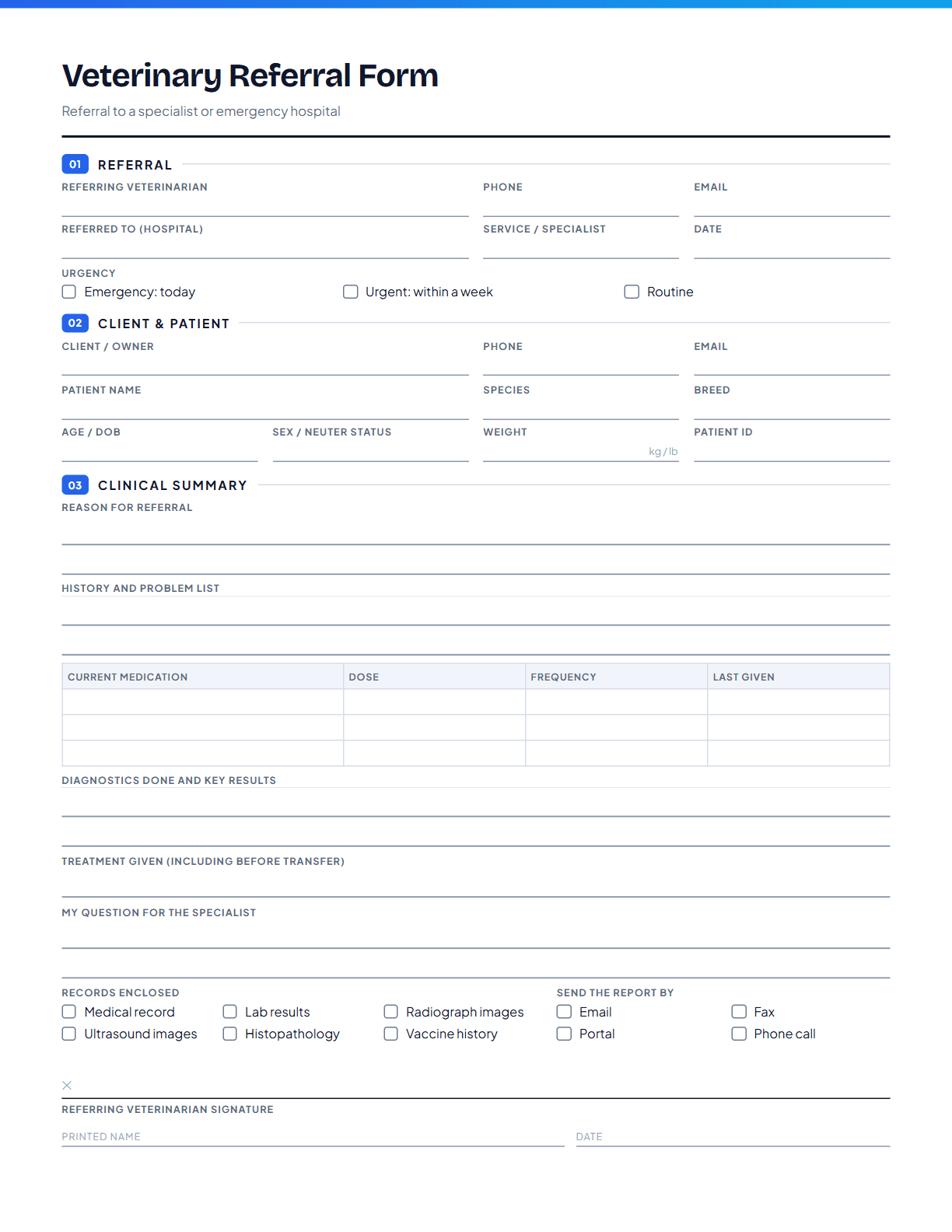
Veterinary Referral Form
1 page, US Letter, portrait
A one-page referral that gives the specialist what they need before the patient arrives: the history, what has already been done, the medications, and the actual question you want answered.
Free · Unbranded · Medical records
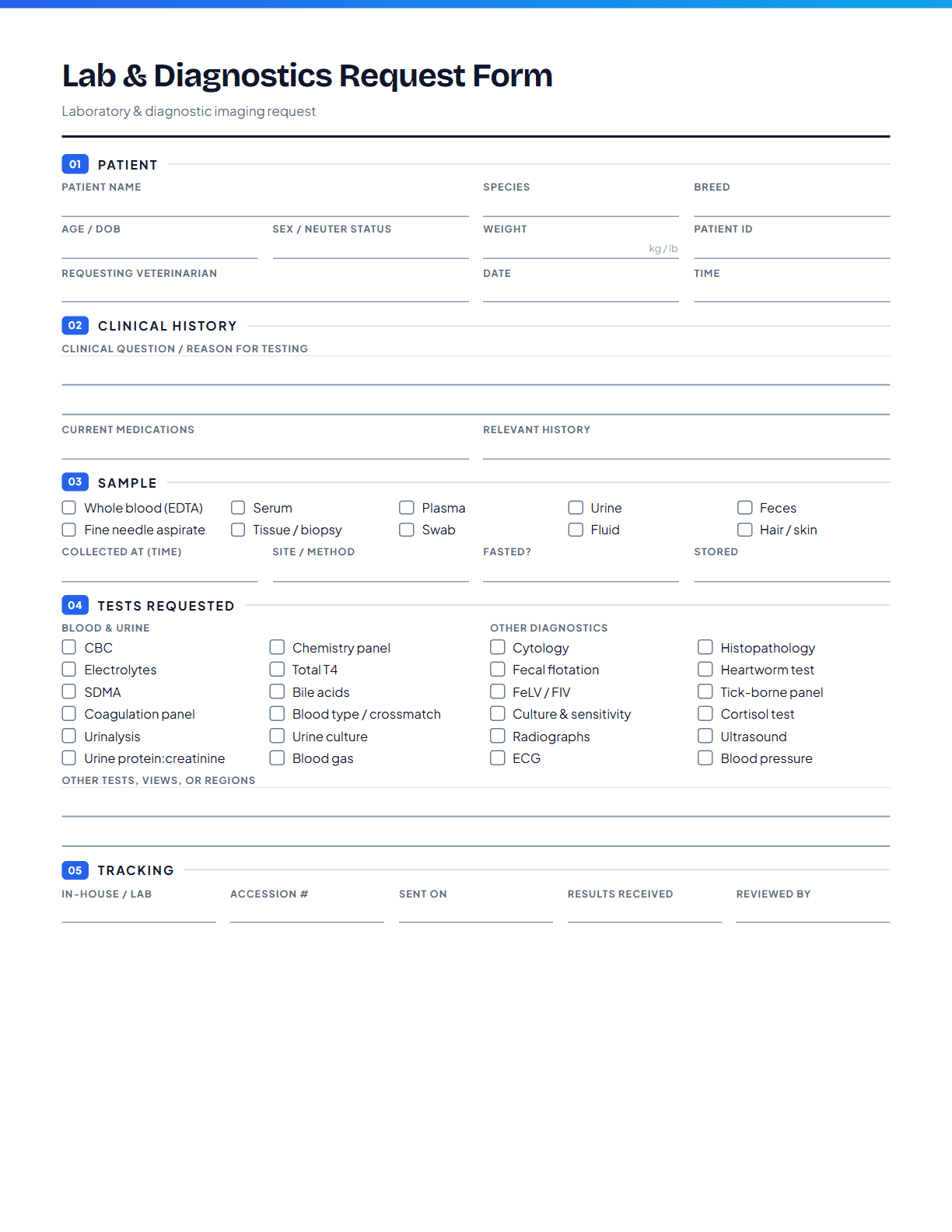
A request form for in-house tests, send-out labs, and imaging. It keeps the clinical question with the sample, so the person running or reading the test knows why it was ordered.
Unbranded: no logo or linksNo account neededPrint at 100% on US LetterUpdated
What’s on the form
Signalment, the requesting veterinarian, and the date and time.
The clinical question, relevant history, and current medications that can affect results.
Sample type, collection time and site, fasting status, and how it was stored.
Common blood, urine, cytology, histopathology, infectious disease, endocrine, and imaging tests, with space for others.
Where it was sent, accession number, when results came back, and who reviewed them.
Fill in online
Every line on the form is editable right here. When you’re done, print it or choose “Save as PDF” in the print dialog. Everything stays in your browser.
Click any line to type, or add your logo. Nothing is uploaded or saved.
Using it well
Pathologists and radiologists interpret results better with context. One line on why the test was ordered improves the report.
Lipemia, recent steroids, and some other drugs change results. Record them so odd values can be explained.
The tracking box makes it easy to see which results are still outstanding at the end of the week.
Printing, editing, and what the form does and doesn’t cover.
Most reference labs have their own submission forms with test codes. Use this as your internal request and tracking record, and attach the lab’s form for send-outs.
Some drugs, such as corticosteroids, anticonvulsants, and thyroid medication, can change lab values. Knowing what the patient is on helps interpret the results.
Yes. There are boxes for radiographs, ultrasound, and ECG, with space for views and regions.
Use the “Other” lines for tests not listed, or fill in the online version before printing.
1 page, US Letter, portrait
A one-page referral that gives the specialist what they need before the patient arrives: the history, what has already been done, the medications, and the actual question you want answered.
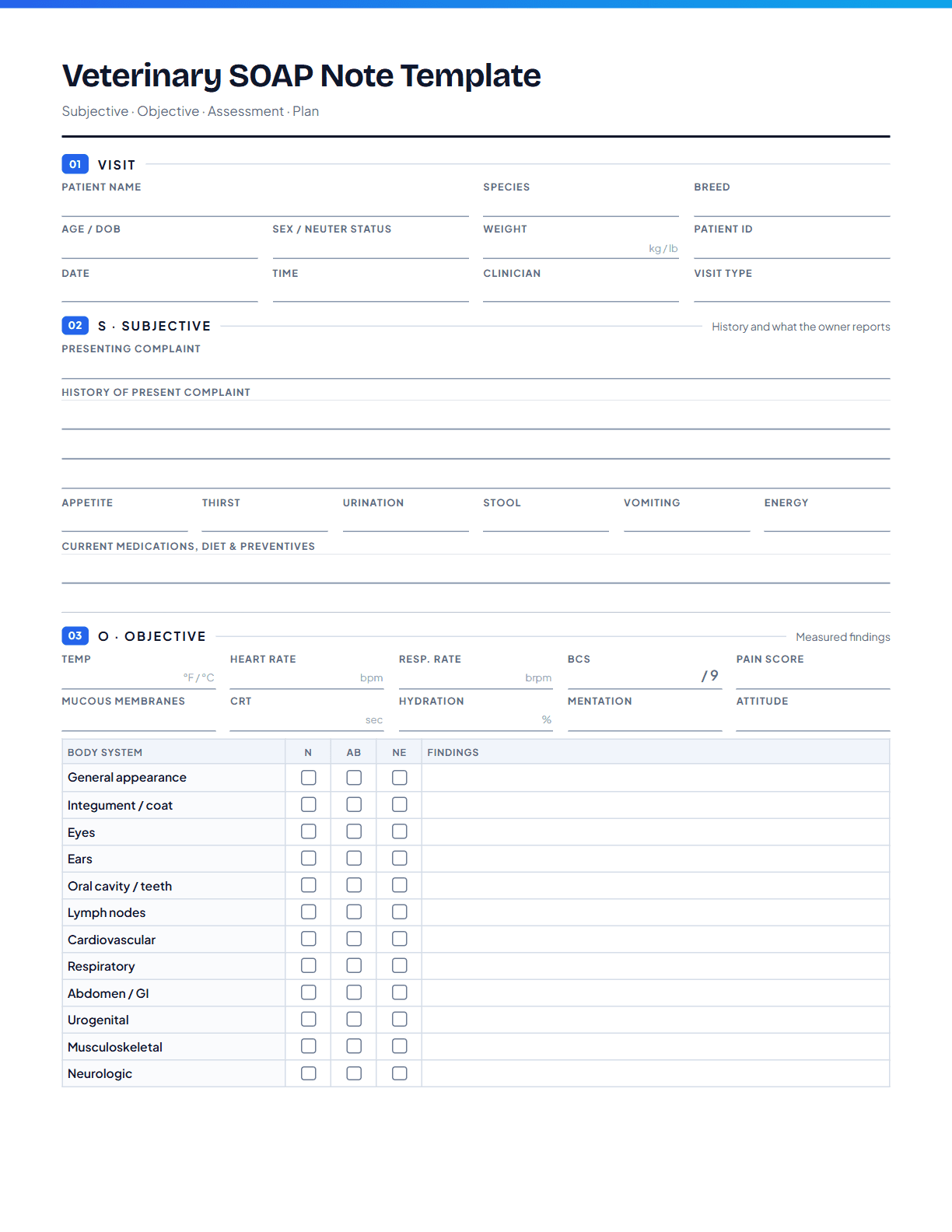
2 pages, US Letter, portrait
A clean, two-page SOAP note for exam-room documentation. Vitals and a body-systems checklist up front, then a structured assessment and plan with a medication table, so nothing important gets lost between the exam and the record.
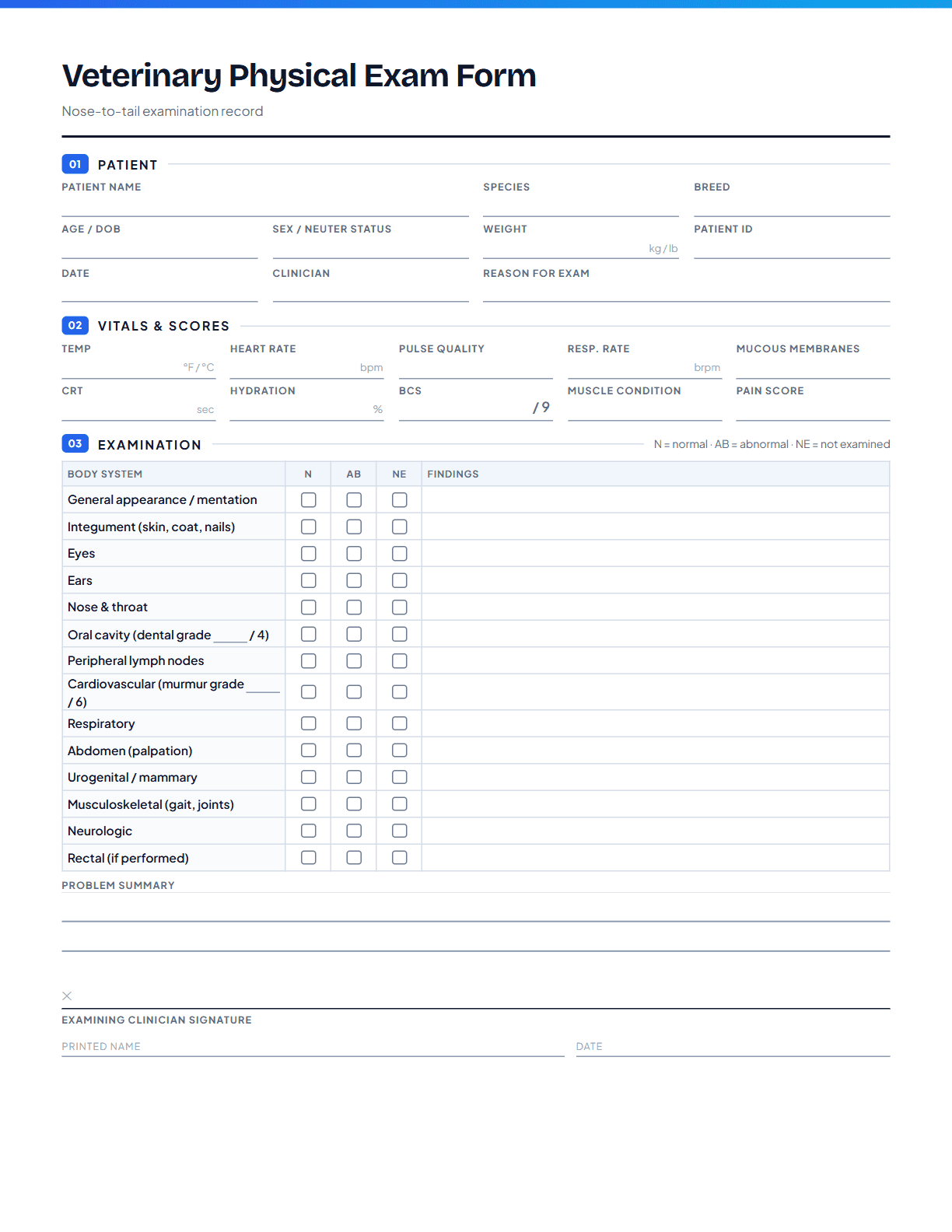
1 page, US Letter, portrait
A one-page, nose-to-tail physical exam form. Fourteen body systems with normal, abnormal and not-examined boxes, room for findings on every line, and the scores you actually record: BCS, muscle condition, pain and dental grade.
A starting point, not legal or clinical advice. VetStack’s forms are general templates. Requirements for medical records, consent, and controlled substances vary by state and practice, so review the wording with your practice’s attorney and check your state veterinary board’s rules before adopting a form as standard.