Canine Osteoarthritis: Diagnosis, Staging and Management
From staging pre-clinical risk with COAST to choosing between NSAIDs and anti-NGF monoclonal antibodies, this guide covers the full clinical picture of canine OA in 2026.

Medically reviewed by Dr. Aamir Javed, DVM· November 26, 2026·How we fact-check

Table of contentsShow
How Common Is Canine OA, Really?
Canine osteoarthritis (OA): diagnosis, staging and management have all improved substantially in recent years, yet the starting point for most conversations is still a prevalence figure that is decades old. Johnston's widely cited 1997 estimate put OA in around 20% of dogs, and that number has circulated through textbooks and client handouts ever since. More recent evidence suggests it is a significant undercount. Wright et al., writing in JSAP in 2022, examined 500 dogs whose owners had flagged possible signs on a checklist; a veterinarian confirmed OA in 38% of those animals, nearly double the older estimate. A UK primary-care cohort study published in Scientific Reports in 2018 describes OA as the most common joint disease diagnosed in veterinary medicine, and dvm360 cites around 40% of dogs experiencing OA-related pain.
The gap matters clinically because underdiagnosis is not an abstract problem. Stoic dogs do not advertise joint pain, and owners routinely interpret early signs as normal ageing. That combination means many dogs arrive at a formal OA diagnosis only once the disease is well established. Getting the prevalence framing right is the first step toward justifying the structured diagnostic and staging approach that follows.
Recognising OA Early: Clinical Signs and Owner Observations
Early canine OA is easy to miss because the signs are non-specific and often intermittent. A dog that is slightly slower to rise in the morning, a little reluctant to jump into the car, or marginally less enthusiastic on the morning walk is not obviously a patient in pain. Owners almost universally attribute these changes to the dog "getting older," and without active screening at wellness visits, the opportunity to intervene early is lost.
On orthopaedic examination, early findings can include mild joint effusion, subtle crepitus, reduced range of motion in the affected joint, and the beginning of muscle atrophy over the associated limb. Pain on palpation is the key signal: when that is present, the appropriate next step is a formal diagnostic workup and staging, not simply a trial of analgesia and a follow-up call. For large and giant breeds, breeds known to carry a higher risk of hip dysplasia in dogs, or dogs with a known orthopaedic history, the threshold for a structured OA workup should be low even before clinical signs appear.
Owner education at every wellness visit is not optional for a practice serious about catching OA early. A short, consistent conversation about what to watch for, combined with a nurse-led mobility check, catches far more cases than waiting for owners to present a visibly lame dog.
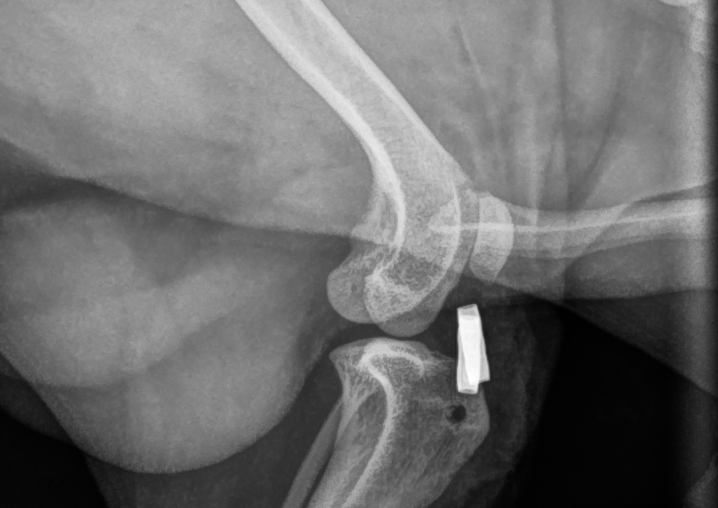
Staging With COAST and COASTeR
The Canine OsteoArthritis Staging Tool (COAST) was proposed by the COAST Development Group in 2018, with authors including Cachon, Innes and Lascelles, and was reported as available from January 2019. Its defining feature is that it stages dogs across a spectrum that begins before clinical signs appear, categorising animals as "at risk" at the pre-clinical end and progressing through increasingly severe established disease. That pre-clinical stage matters: it creates a pathway for earlier, preventive intervention rather than waiting for a limping dog.
The 2023 international consensus treatment guidelines, published by the COAST Development Group in Frontiers in Veterinary Science, are organised around COASTeR, which is COAST with the radiography component removed. This makes the guidelines applicable in practice settings where radiography is not performed at every visit, and it links treatment selection directly to staging rather than leaving it as a loose clinical impression. The scale below maps the stages and their corresponding treatment tiers.
- Stage 0Clinically normal; no OA risk factors
- Stage 1Clinically normal; OA risk factors present
- Stage 2Mild signs; owner-reported changes, mild exam findings
- Stage 3Moderate signs; consistent pain on exam, functional impact
- Stage 4Severe signs; marked pain, significant loss of function
COASTeR (COAST excluding radiography) organises the 2023 COAST Development Group consensus treatment guidelines in Frontiers in Veterinary Science.
Non-Pharmacological Management: The Foundation of Every OA Plan
Non-pharmacological measures are not an alternative to analgesia. They work alongside it, and they should be initiated regardless of which drug is chosen. Weight management is the single most impactful intervention for most dogs: the 2022 AAHA guidelines support maintaining a lean body condition score (a target of around 4.5/9 is commonly recommended), achieved primarily through caloric restriction rather than exercise alone, since increasing activity in a painful dog without first addressing weight is counterproductive. Omega-3 fatty acid supplementation is a consistent component of published OA management guidance, and adjunct modalities including photobiomodulation, intra-articular injections and oral joint supplements can be layered on top of the core plan based on individual patient response and practice capability.
| Management Category | Role in OA Plan |
|---|---|
| Weight management | Lean BCS (around 4.5/9) via caloric restriction |
| Exercise prescription | Daily leash walks and therapeutic exercises, tailored to dog |
| Omega-3 supplementation | Core plan component per published guidance |
| Photobiomodulation (laser) | Adjunct modality; added to core plan |
| Intra-articular injections | Adjunct for selected joints and patients |
| Oral joint supplements | Additional adjunct alongside core analgesia |

Pharmacological Options: NSAIDs, Anti-NGF and Beyond
NSAIDs remain the cornerstone of pharmacological management for canine OA: diagnosis, staging and management all assume that analgesic therapy will be part of any active treatment plan. Long-term NSAID use requires routine monitoring of renal and hepatic function, and the frequency of that monitoring should reflect the individual patient's age, concurrent disease and baseline values.
The analgesic landscape shifted in 2023 when the FDA approved bedinvetmab (Librela, Zoetis) as the first injectable monoclonal antibody approved in the US for controlling OA pain in dogs. Bedinvetmab is a fully canine anti-NGF monoclonal antibody administered once monthly by a veterinarian. A randomised clinical trial has compared bedinvetmab with meloxicam for canine OA pain control, and the drug offers a meaningful option for dogs where NSAID use is complicated by concurrent disease or owner compliance concerns.
The safety picture around bedinvetmab is still developing. Musculoskeletal adverse events in dogs receiving the drug have been reported and are under active discussion in the literature, including work by Farrell and colleagues. The appropriate clinical response is to follow the emerging evidence, discuss the current state of knowledge with owners, and make prescribing decisions case by case. Overstating either the risk or its absence would be premature at this point.
The Glasgow Composite Pain Scale is designed for assessing acute pain, so for tracking response to NSAID or anti-NGF therapy over time, validated owner-completed chronic pain tools such as the Helsinki Chronic Pain Index, the Canine Brief Pain Inventory and LOAD give a more structured basis for decisions about dose adjustments or treatment changes.

Monitoring Progress and Adjusting the Plan
A diagnosis and a prescription are not a plan. For canine osteoarthritis (OA), diagnosis, staging and management only deliver sustained benefit when they are linked by a structured reassessment loop. Without scheduled rechecks, long-term OA cases drift: analgesia becomes a repeat prescription, weight management slides, and progression through COAST stages goes unnoticed until the dog is significantly more compromised than the records suggest.
Structured monitoring for a dog on a long-term OA plan should include orthopaedic re-examination, body weight and BCS recording, and repeat laboratory monitoring for animals on NSAIDs. Between visits, owner-completed functional assessment tools capture the kind of day-to-day information that a six-weekly appointment cannot. The Helsinki Chronic Pain Index is a practical instrument for tracking functional pain between visits: it gives owners a structured way to report what they are observing and gives the clinical team a longitudinal record that makes trend analysis possible rather than relying on recall.
As a dog moves through COAST stages, the treatment plan should move with it. What is appropriate at Stage 2 is not sufficient at Stage 4, and the structured staging framework exists precisely to make those transitions explicit rather than reactive. Canine OA management done well is not a fixed protocol; it is an iterative process that responds to what the animal and the owner are actually experiencing.
Sources
- Identification of canine osteoarthritis using an owner‐reported questionnaire and treatment monitoring using functional mobility tests - Journal of Small Animal Practice (Wiley)
- Face validity of a proposed tool for staging canine osteoarthritis: Canine OsteoArthritis Staging Tool (COAST) - The Veterinary Journal (via City University of Hong Kong Scholars)
- COAST Development Group's international consensus guidelines for the treatment of canine osteoarthritis - Frontiers in Veterinary Science
- 2022 AAHA Pain Management Guidelines for Dogs and Cats - AAHA
- Zoetis Announces U.S. FDA Approval of Librela (bedinvetmab injection) to Control Osteoarthritis (OA) Pain in Dogs - Zoetis
- Commentary: Musculoskeletal adverse events in dogs receiving bedinvetmab (Librela) - Frontiers in Veterinary Science (via PubMed Central)
This blog is intended for veterinary professionals. The information presented is for general educational and reference purposes only and reflects commonly accepted clinical knowledge at the time of writing. It is not a substitute for your own clinical judgment, your practice's protocols, or a full assessment of the individual patient.
Tired of typing your SOAPs?
VetStack is an AI scribe for vets. Record your consult on any phone, get a complete, editable SOAP note in under 60 seconds, paste it into your PIMS. The average vet saves 2 hours of charting a day.
Try VetStack free5 notes a day, free forever. No credit card.

Tired of typing your SOAPs?
VetStack is an AI scribe for vets. Record your consult on any phone, get a complete, editable SOAP note in under 60 seconds, paste it into your PIMS. The average vet saves 2 hours of charting a day.
Try VetStack free5 notes a day, free forever. No credit card.
Keep reading

Wild Animal Veterinarian Salary: What You Can Really Earn
Wild animal veterinarian salary data varies wildly across sources - from $68K to over $260K. Here's how to read the numbers, what drives the spread, and what to expect at each career stage.

Veterinary School: Costs, Admission, and What to Expect
From GPA and GRE cutoffs to six-figure debt loads, veterinary school demands serious preparation. Here is an honest breakdown of what it costs, what gets you in, and how to run the numbers before you commit.

Veterinary Behavior: A Clinical Primer for General Practice
Behavioral complaints are among the most common reasons owners rehome or euthanize otherwise healthy pets. This guide covers how general practitioners can integrate veterinary behavior into routine care, recognize medical contributors, and know when specialist referral is the right call.