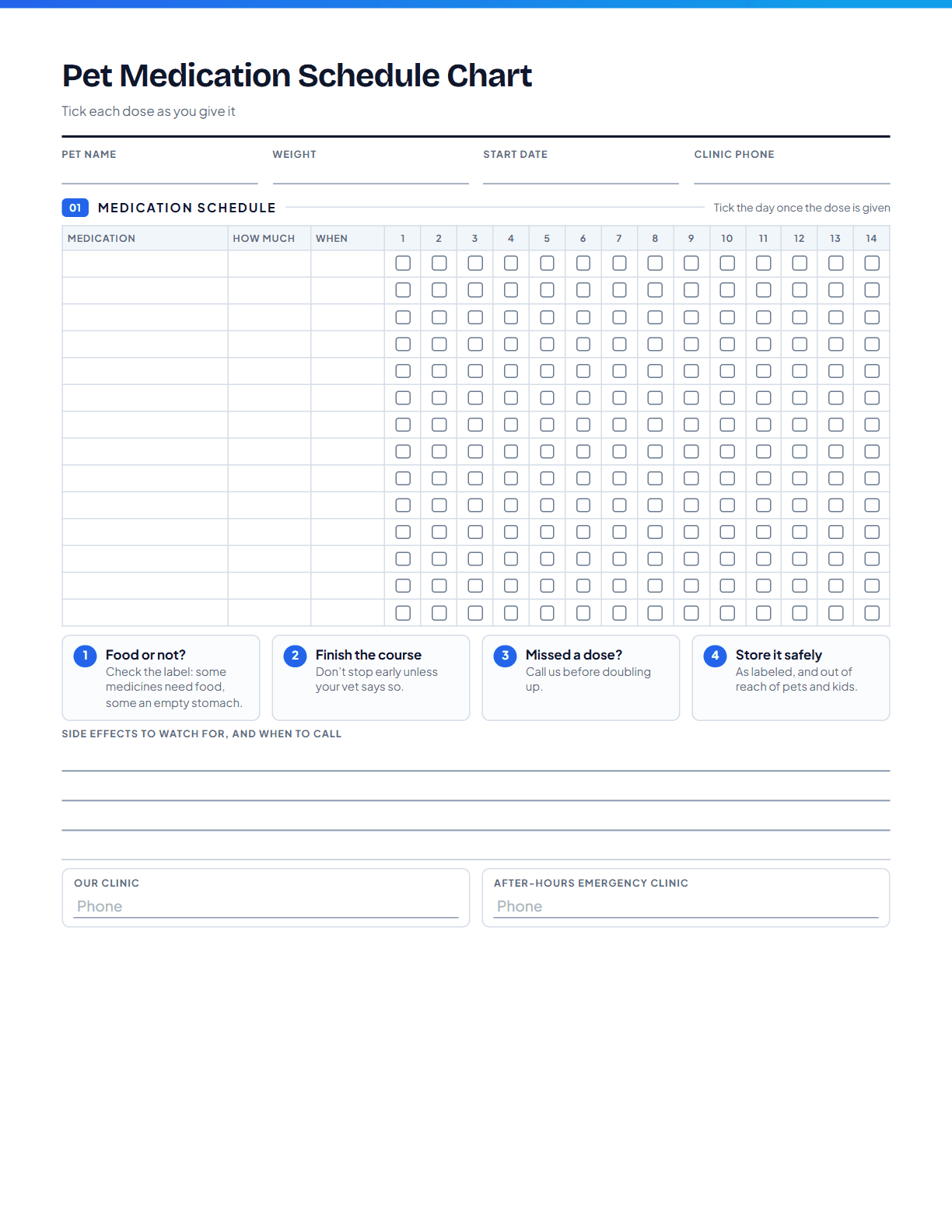
Pet Medication Schedule Chart
1 page, US Letter, portrait
A two-week tick-off chart so everyone in the house knows which medicine your pet gets, how much, and when, and whether today’s dose has already been given.
Free · Unbranded · Client handouts
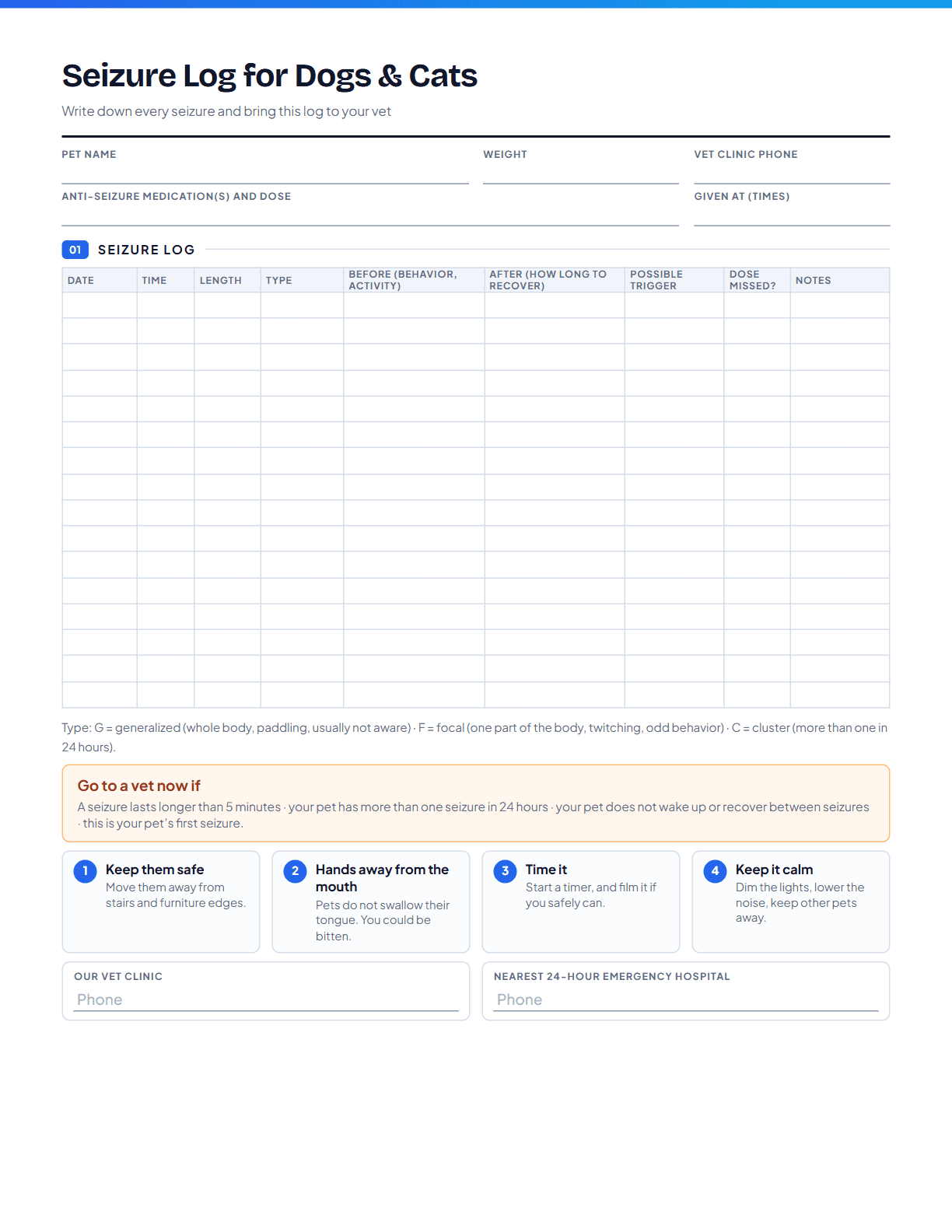
A log for owners to fill in after each seizure: when it happened, how long it lasted, what it looked like, and how the pet was before and after. Over time it shows your veterinarian whether seizures are getting more frequent and whether treatment is working.
Unbranded: no logo or linksNo account neededPrint at 100% on US LetterUpdated
What’s on the form
Pet name, anti-seizure medications with doses, and your vet’s number.
Sixteen lines for date, time, length, type, what happened before and after, possible triggers, and whether a dose was missed.
Seizures that last too long or come in clusters, and what to do.
Four short steps for keeping your pet, and yourself, safe.
Fill in online
Every line on the form is editable right here. When you’re done, print it or choose “Save as PDF” in the print dialog. Everything stays in your browser.
Click any line to type, or add your logo. Nothing is uploaded or saved.
Using it well
Seizures feel much longer than they are. Start a timer, or film it if you can safely do so. Video is very useful to your vet.
A late or missed dose of anti-seizure medication is a common trigger. Record it on the same line.
Your vet will look at how often seizures happen and how long they last to decide whether to change treatment.
Printing, editing, and what the form does and doesn’t cover.
Go to a veterinarian immediately if a seizure lasts longer than about five minutes, if your pet has more than one seizure in 24 hours, or if your pet does not recover between seizures. Follow any specific instructions your veterinarian has given you.
Stay calm, move your pet away from stairs and hard objects, keep your hands away from the mouth, dim lights and noise, and time the seizure. Pets do not swallow their tongues.
Your veterinarian uses the pattern of seizures to diagnose the cause and judge whether treatment is working. A written log is far more accurate than memory.
A seizure that affects only part of the body, such as twitching of the face or one leg, or odd behavior like fly-biting. Your pet may stay partly aware. Write down exactly what you saw.
1 page, US Letter, portrait
A two-week tick-off chart so everyone in the house knows which medicine your pet gets, how much, and when, and whether today’s dose has already been given.
2 pages, US Letter, portrait
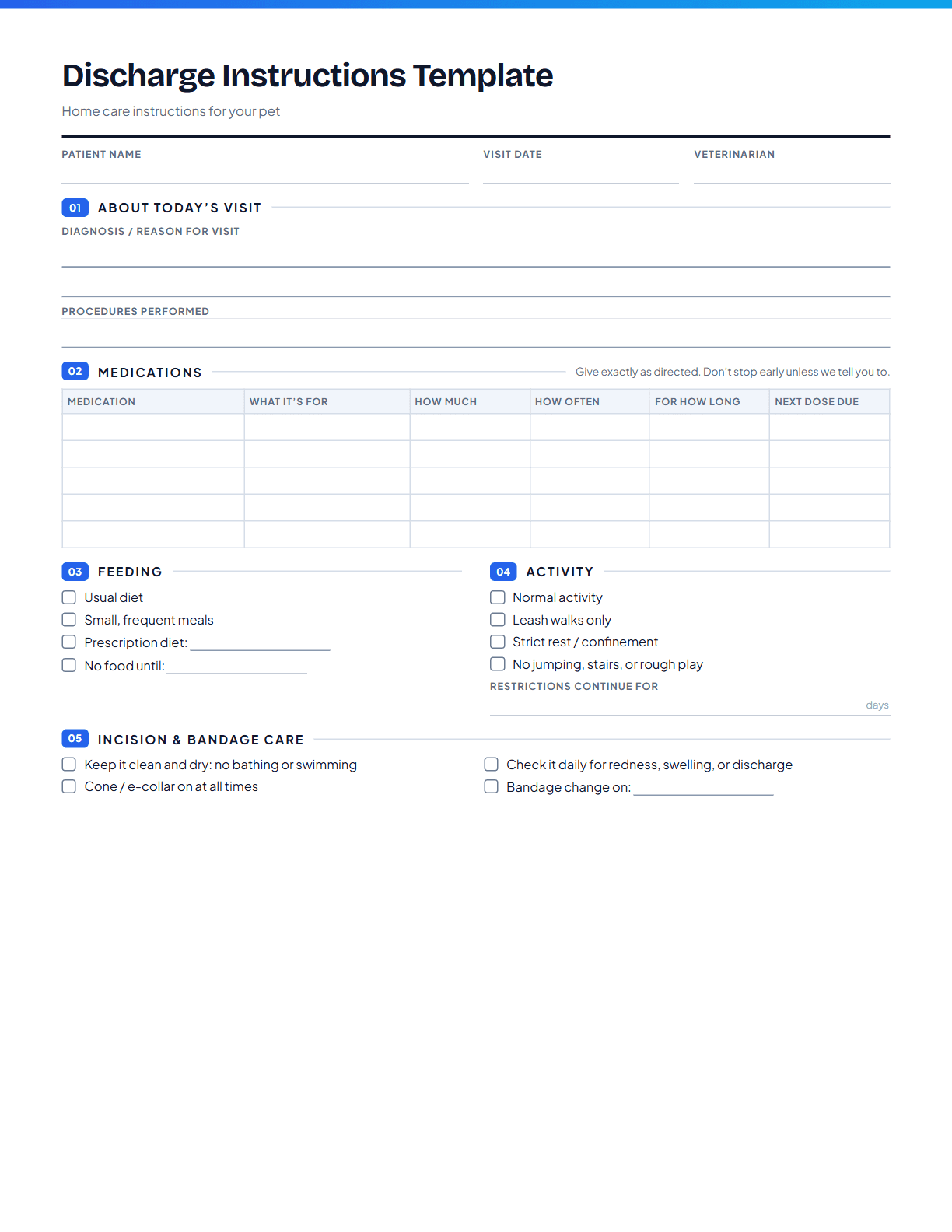
A take-home sheet clients can actually follow: what was done, every medication with dose and timing, feeding and activity rules, incision care, and a clear list of signs that mean "call us now".
2 pages, US Letter, portrait
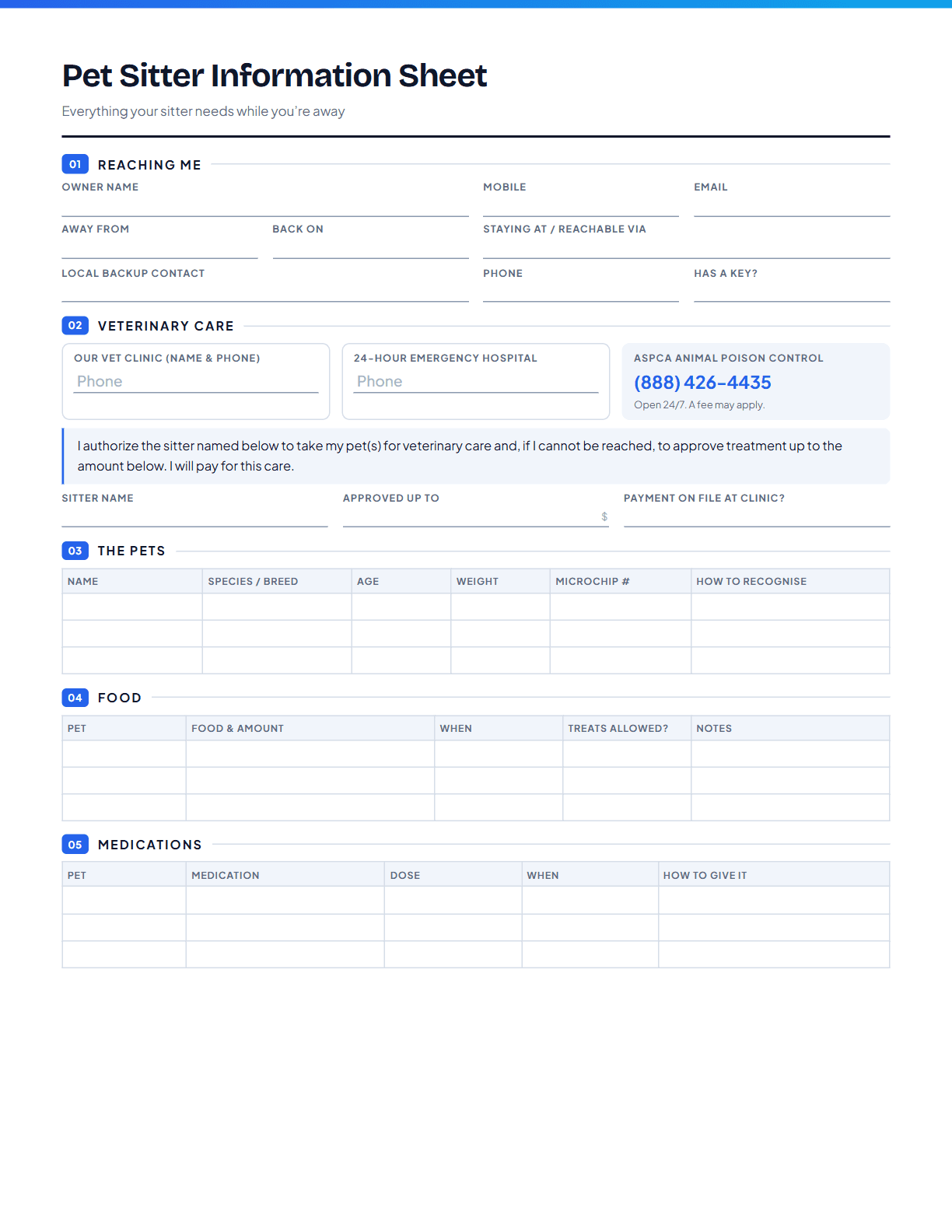
Everything a sitter needs in one place: how to reach you, your vet and the nearest ER, permission to get your pet treated, plus each pet’s food, medicines, routine, quirks, and the house details.
A starting point, not legal or clinical advice. VetStack’s forms are general templates. Requirements for medical records, consent, and controlled substances vary by state and practice, so review the wording with your practice’s attorney and check your state veterinary board’s rules before adopting a form as standard.