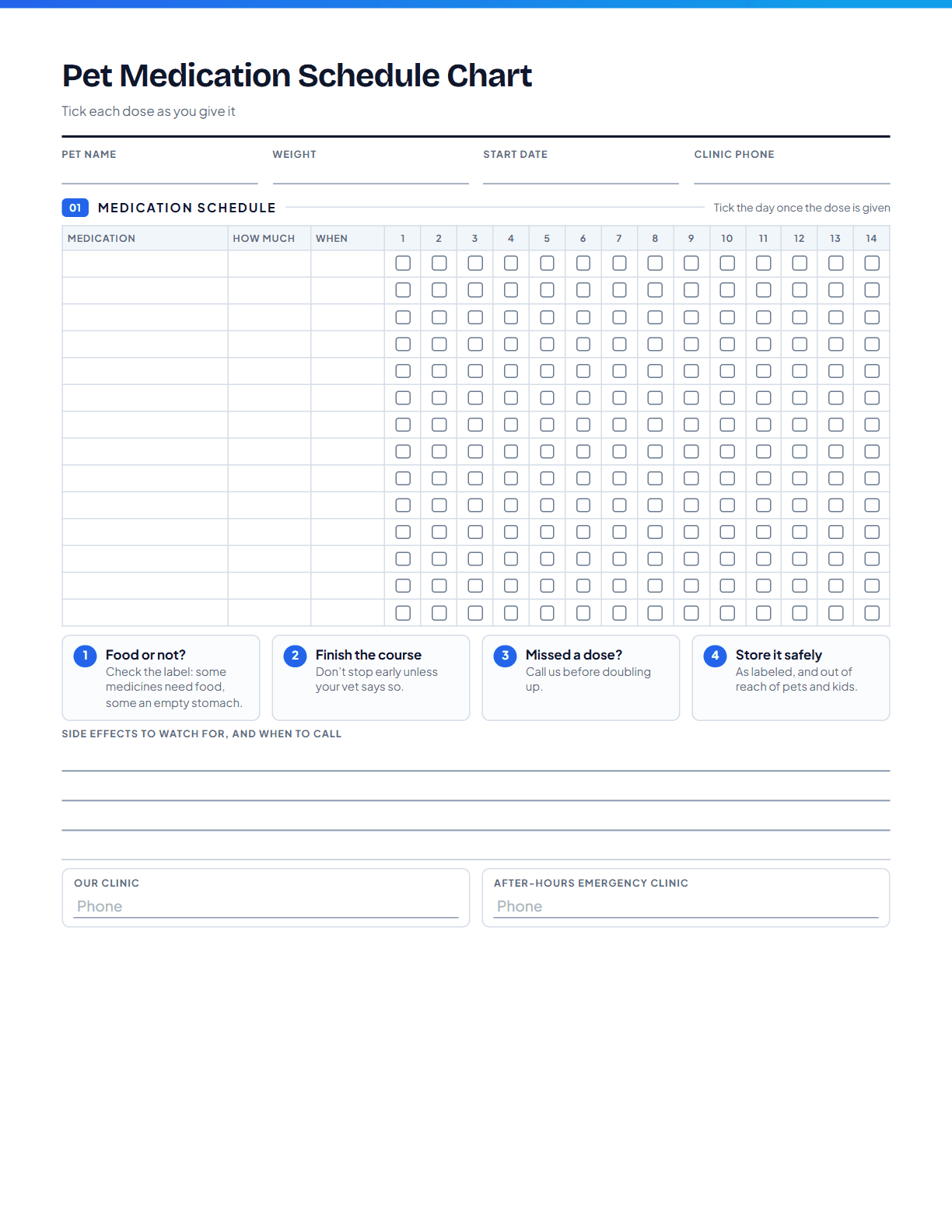
Pet Medication Schedule Chart
1 page, US Letter, portrait
A two-week tick-off chart so everyone in the house knows which medicine your pet gets, how much, and when, and whether today’s dose has already been given.
Free · Unbranded · Client handouts
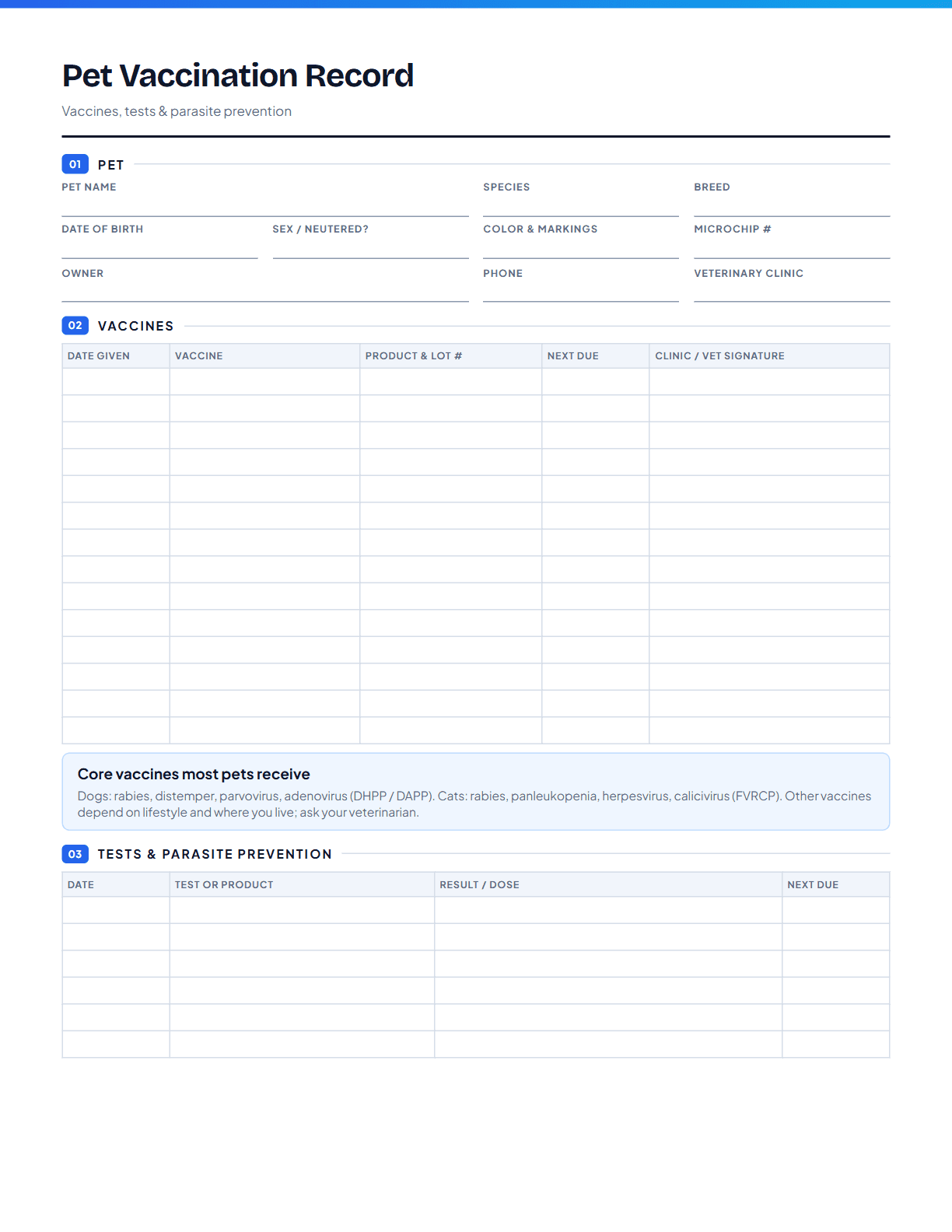
A one-page vaccine history for a dog or cat: every vaccine with the product, lot number, next due date, and who gave it, plus a log for heartworm and parasite tests and prevention. Handy for boarding, groomers, daycare, and new vets.
Unbranded: no logo or linksNo account neededPrint at 100% on US LetterUpdated
What’s on the form
Name, species, breed, date of birth, sex, color and markings, microchip number, and owner contact details.
Fourteen lines for date, vaccine, product and lot number, next due date, and the clinic or veterinarian who gave it.
The core vaccines most dogs and cats receive, with a note that others depend on lifestyle and location.
Heartworm and FeLV/FIV tests, flea, tick and heartworm prevention, and deworming with results and next due dates.
Fill in online
Every line on the form is editable right here. When you’re done, print it or choose “Save as PDF” in the print dialog. Everything stays in your browser.
Click any line to type, or add your logo. Nothing is uploaded or saved.
Using it well
Product and lot numbers matter if there’s ever a reaction or a recall. Ask for them, or copy them from the vaccine sticker on your invoice.
Boarding kennels, groomers, and daycares usually ask for proof of vaccination. A tidy record saves a call to your vet.
Many places legally require the official rabies certificate signed by your veterinarian. Keep it with this record.
Printing, editing, and what the form does and doesn’t cover.
For dogs, core vaccines typically include rabies, distemper, parvovirus, and adenovirus (often combined as DHPP or DAPP). For cats, rabies, panleukopenia, herpesvirus, and calicivirus (often combined as FVRCP). Your veterinarian will recommend others based on lifestyle and where you live.
No. It’s a personal record. The official rabies certificate is issued and signed by your veterinarian, and many boarding facilities and local authorities require that original document.
Yes. Clinics, breeders, and shelters can fill in the pet’s details online, print it, and send it home with puppies and kittens.
Print another copy and number the pages, or keep the newest copy with the most recent vaccines on top.
1 page, US Letter, portrait
A two-week tick-off chart so everyone in the house knows which medicine your pet gets, how much, and when, and whether today’s dose has already been given.
2 pages, US Letter, portrait
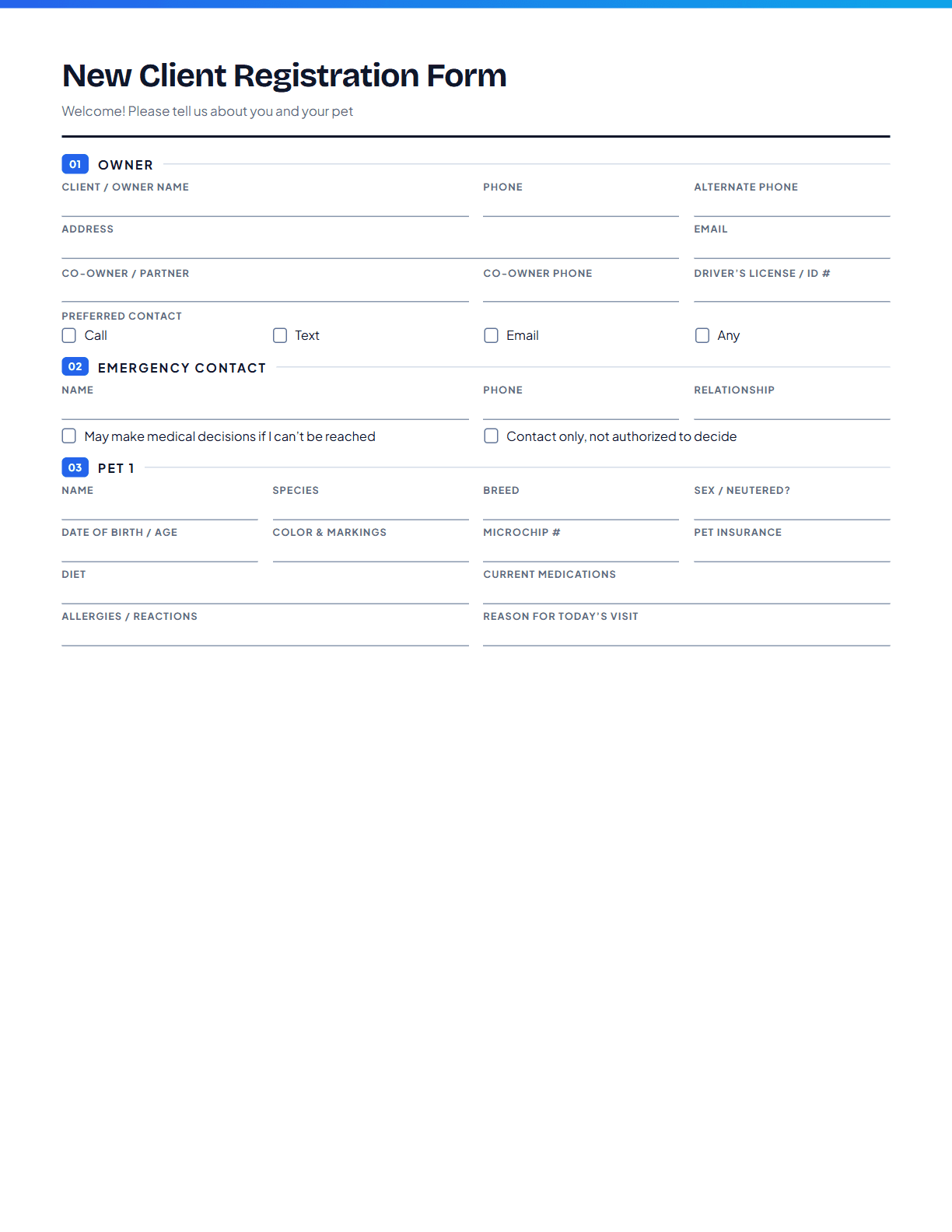
A clean intake form for new clients: owner and emergency contacts, room for two pets, the previous clinic and a records-transfer authorization, reminder preferences, and the payment acknowledgment, all in one pass at the front desk.
2 pages, US Letter, portrait
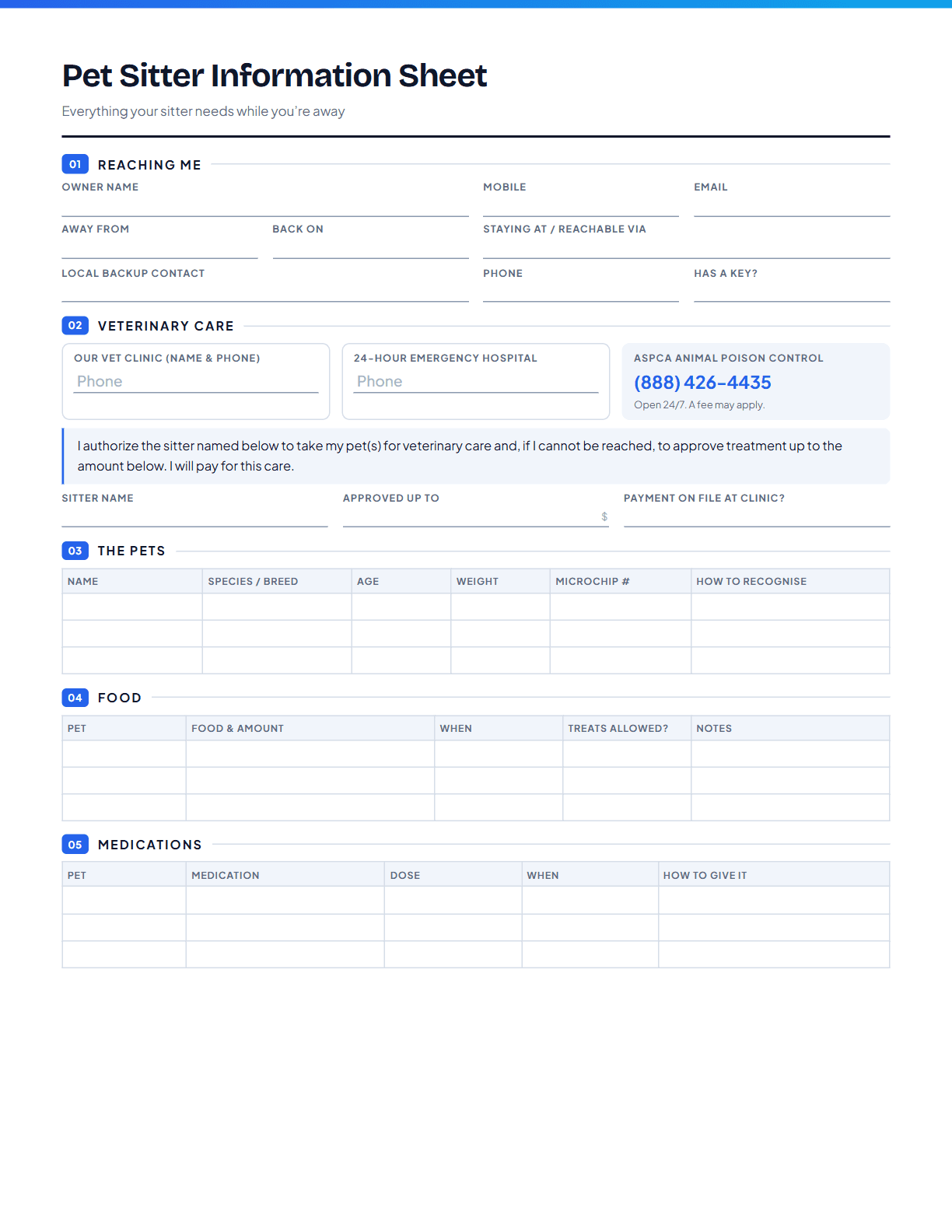
Everything a sitter needs in one place: how to reach you, your vet and the nearest ER, permission to get your pet treated, plus each pet’s food, medicines, routine, quirks, and the house details.
A starting point, not legal or clinical advice. VetStack’s forms are general templates. Requirements for medical records, consent, and controlled substances vary by state and practice, so review the wording with your practice’s attorney and check your state veterinary board’s rules before adopting a form as standard.