VetStack
FeaturesPricing
BlogFAQContact
HomeVeterinary formsVaccine Fridge Temperature Log

Free · Unbranded · Compliance & logs

Vaccine Refrigerator Temperature Log (Veterinary)
Free PDF.

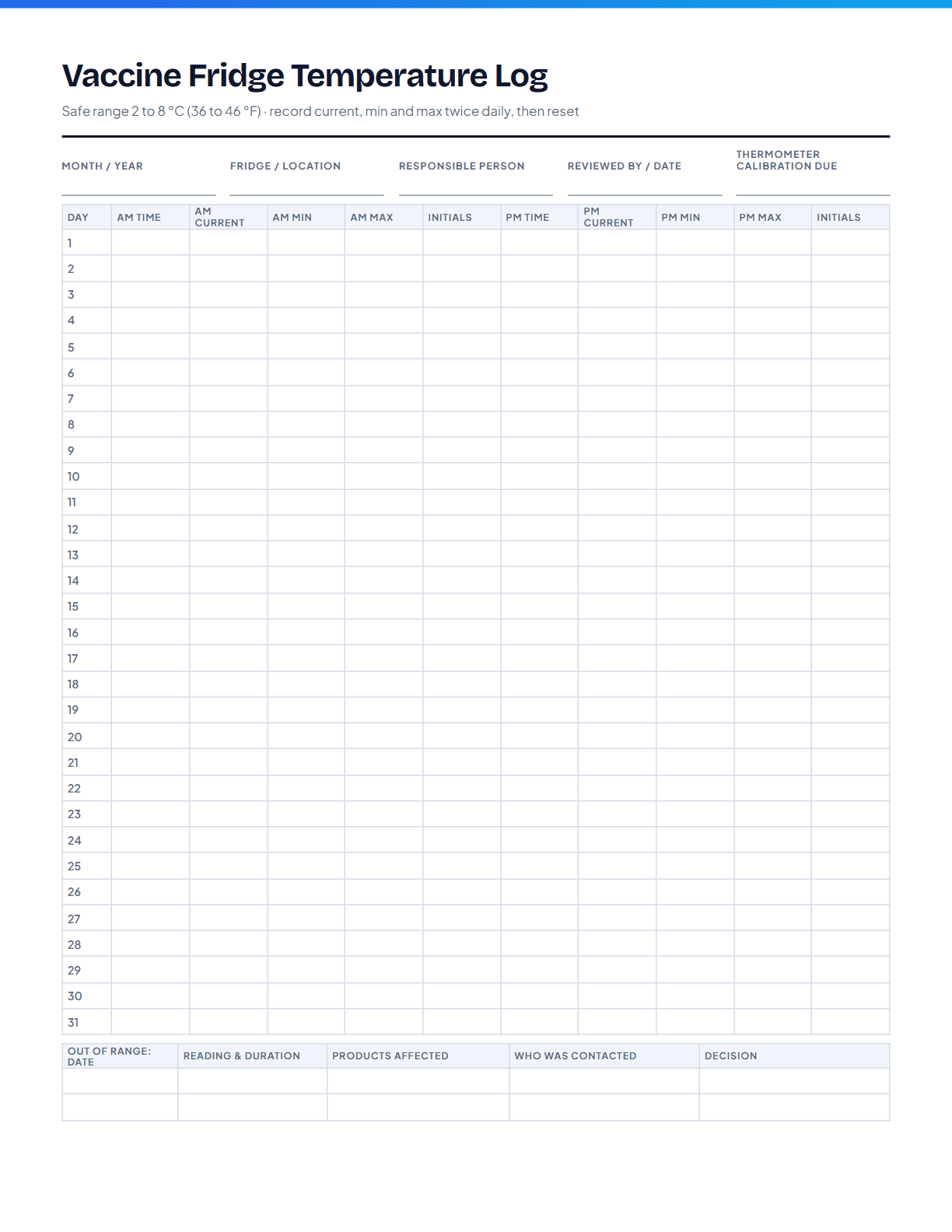
A month-at-a-glance log for the vaccine fridge. Morning and afternoon readings with the minimum and maximum since the last check, the safe range printed at the top, and a section for what was done when a reading fell outside it.

Fill in online
  • 1 page
  • US Letter
  • Twice-daily min / max
  • Out-of-range record

Unbranded: no logo or linksNo account neededPrint at 100% on US LetterUpdated November 10, 2026

Preview of page one of the Vaccine Fridge Temperature Log
PDF · 1 page

What’s on the form

Every section, and what it’s for.

01

Unit details

Month and year, the fridge and its location, who is responsible, and when the thermometer is due for calibration.

02

Daily readings

Thirty-one days, each with morning and afternoon current, minimum, and maximum temperatures and initials.

03

Safe range

Refrigerated vaccines are generally stored at 2 to 8 °C (36 to 46 °F); check each product label.

04

Out-of-range actions

What happened, how long it lasted, which products were affected, who was contacted, and the decision.

05

Monthly review

A sign-off line for the manager reviewing the month.

Fill in online

Type it, then print or save.

Every line on the form is editable right here. When you’re done, print it or choose “Save as PDF” in the print dialog. Everything stays in your browser.

Click any line to type, or add your logo. Nothing is uploaded or saved.

Full size

Using it well

Small habits that make it worth the paper.

Read min and max, then reset

The current temperature alone misses what happened overnight. Record the min and max since the last check, then reset the thermometer.

Do not throw out vaccines straight away

After an excursion, label the affected stock “do not use”, keep it cold, and call the manufacturer. Many products are still usable.

Keep vaccines away from the walls

Store vaccines in the middle of the fridge in their boxes, not in the door, and away from the cooling vents.

Questions about
this form.

Printing, editing, and what the form does and doesn’t cover.

What temperature should a vaccine fridge be?+

Refrigerated vaccines are generally stored between 2 and 8 °C (36 to 46 °F), often aiming for about 5 °C (40 °F). Always check the storage instructions on each product.

How often should vaccine fridge temperatures be checked?+

Commonly at least twice a day, at the start and end of the working day, recording the current, minimum, and maximum temperatures. A continuous data logger with alarms is better still.

What should we do if the fridge goes out of range?+

Keep the fridge closed or move vaccines to a working unit, mark them “do not use”, record the temperatures and duration, and contact the vaccine manufacturers for guidance before using or discarding them.

How long should temperature logs be kept?+

Keep them for as long as your state, your vaccine suppliers, or your quality policy requires. Many practices keep at least three years.

Often printed together

All veterinary forms
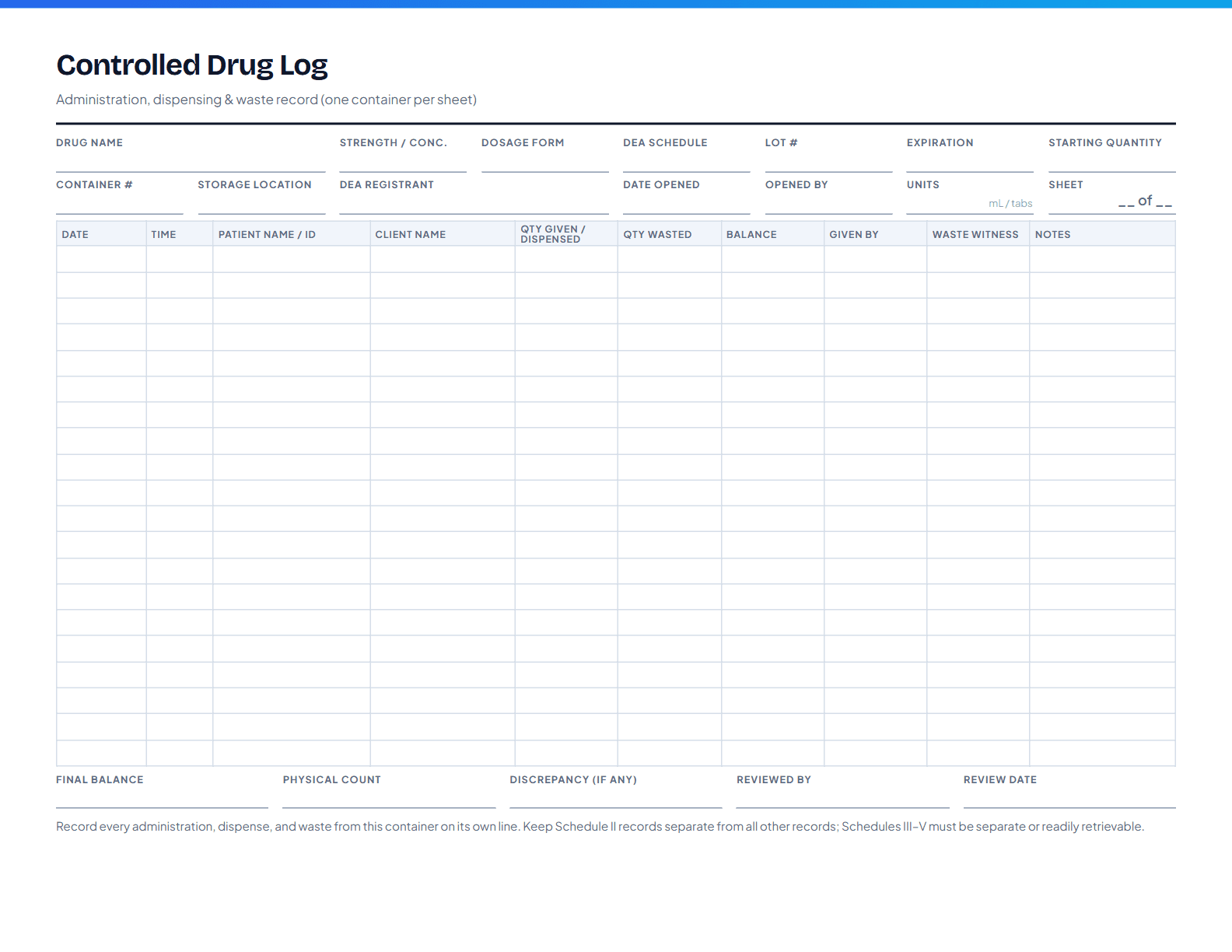
Preview of page one of the Controlled Drug Log

Controlled Drug Log

1 page, US Letter, landscape

A one-container-per-sheet controlled drug log. Every administration, dispense, and waste gets its own line with a running balance and a witness for waste, so counts reconcile and records are easy to pull.
Fill in online
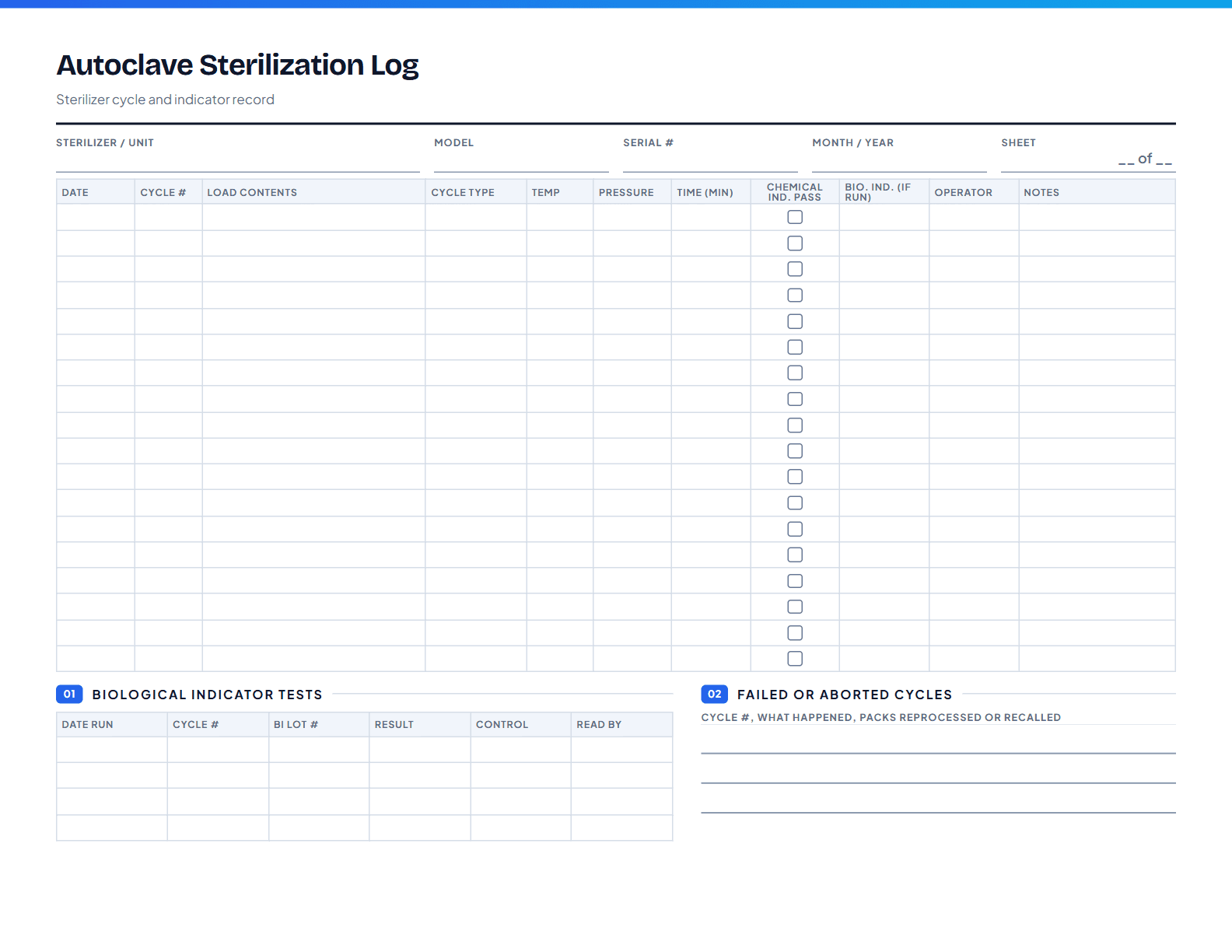
Preview of page one of the Autoclave Sterilization Log

Autoclave Sterilization Log

1 page, US Letter, landscape

A log for every autoclave cycle: what was in the load, the temperature, pressure, and time reached, whether the chemical indicators changed, and the result of each biological indicator test. If a pack is ever questioned, the cycle can be traced.

Fill in online
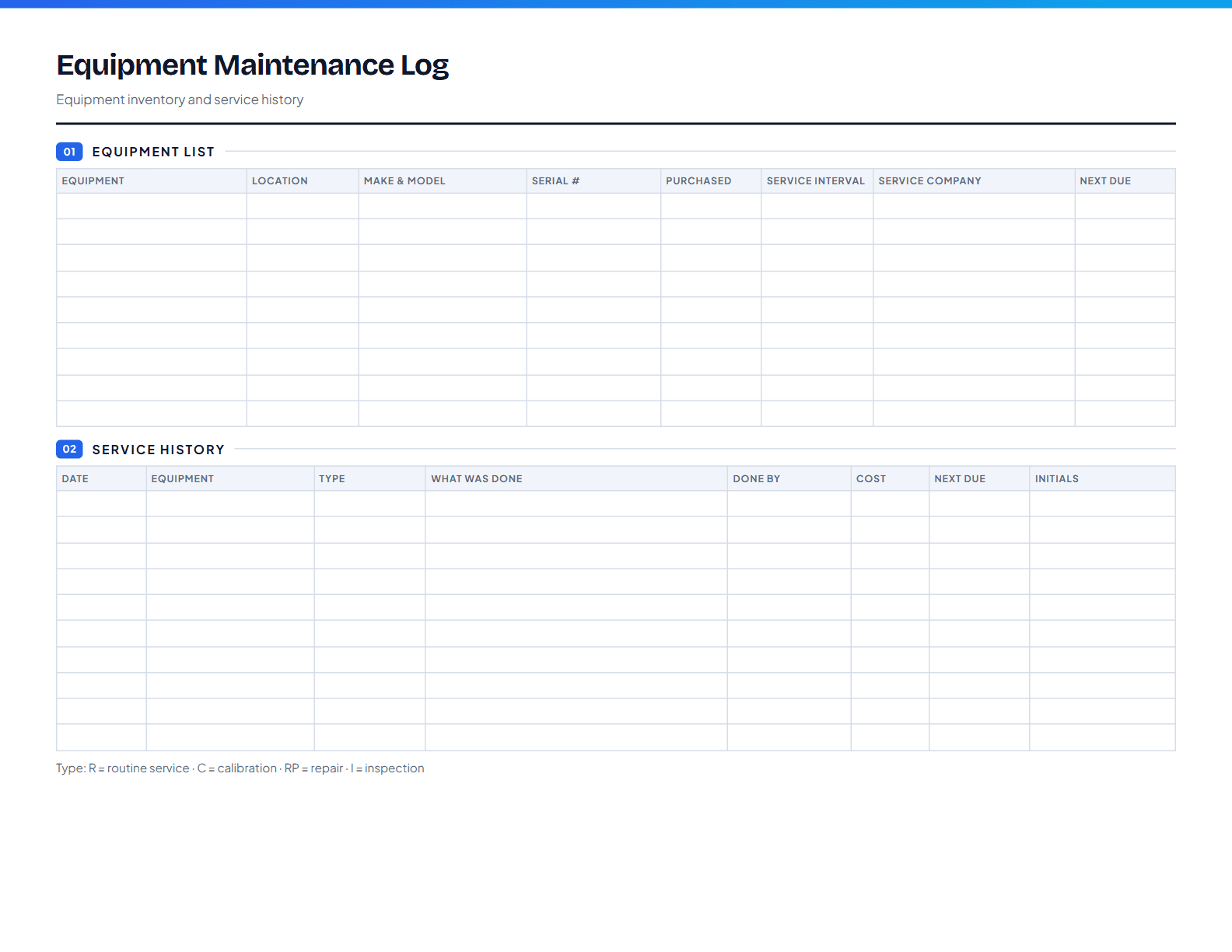
Preview of page one of the Equipment Maintenance Log

Equipment Maintenance Log

1 page, US Letter, landscape

One place to track the clinic’s equipment: what you have, its serial number, how often it needs servicing, and a history of every service, calibration, and repair. Useful for budgeting, warranty claims, and inspections.

Fill in online

A starting point, not legal or clinical advice. VetStack’s forms are general templates. Requirements for medical records, consent, and controlled substances vary by state and practice, so review the wording with your practice’s attorney and check your state veterinary board’s rules before adopting a form as standard.

VetStack
VetStack

AI-powered SOAP note generation for veterinarians. Save time, see more patients.

Encrypted in transit and at rest, isolated per practice, and never used to train AI. How we protect your data

Stay in the loop

New tools, product updates, and clinical workflow ideas, straight to your inbox. No spam.

Free Tools

All Free ToolsBenadryl Dosage CalculatorDrug Dosage CalculatorIV Fluid Rate CalculatorBody Condition ScoreBSA CalculatorIRIS CKD StagingVaccine Schedule GeneratorPrintable Veterinary FormsSOAP Note TemplateEuthanasia Consent FormVeterinary NewsFind a VeterinarianList Your Clinic

Dog & Cat Diseases

All ConditionsParvovirus in DogsFeline HyperthyroidismHip Dysplasia in DogsChronic Kidney Disease in CatsHeartworm Disease in DogsFLUTD in Cats

Learning & Exam Prep

Free Veterinary CECE Requirements by StateVeterinary ConferencesVeterinary ExternshipsAll Exam PrepNAVLE Practice QuestionsVTNE Practice QuestionsBCSE Practice Questions

Compare

Best AI Scribe SoftwareVetStack vs ScribbleVetVetStack vs ScribenoteVetStack vs VetRecVetStack vs CoVet

Company

AboutPricingReferral ProgramBlogSalary SurveySalary by StateBecome a VeterinarianVet SchoolsCompare Vet SchoolsJob BoardPost a Job (Free)SecurityFAQContact

© 2026 Ilias Ventures LLC. VetStack is operated by Ilias Ventures LLC. All rights reserved.

PrivacyTermsCookiesAcceptable UseDisclaimerService ProvidersAccessibility